
 Arjun Patel
Quick disclaimer before anything else: I am not a freelancer. I came to Germany the boring employee way — Blue Card, a backend job in Munich, payslip every month. But when my wife and me were planning the Amsterdam → Munich move at the start of 2024, I sat down for about two weeks and ran the freelance numbers hard, because on paper a well-booked contractor in Germany out-earns me by a lot. I didn’t do it in the end — I’ll tell you why further down — and honestly I’m still a little jealous of the two ex-colleagues who did. One does SAP S/4HANA, one does DevOps. Both bill more per day than I’d want to admit.
So this is the article I wish those two had handed me back then, plus everything I’ve since had to learn to answer the “should I go freelance in Germany?” DMs that land in my LinkedIn every week — a lot of them from engineers back home in India. It’s long. Freelancing here is genuinely good money, but it’s expert mode: the Finanzamt (tax office), the Deutsche Rentenversicherung (state pension insurance fund) and the Ausländerbehörde (foreigners’ registration office) each run their own classification test on you, and getting one of them wrong can cost you years of back-tax, or your visa, or both.

Before the ~7,000 words: if you just want to sanity-check the immigration side, run yourself through the visa eligibility checker (two minutes, free). If you’d rather line up an anchor client or a contract-to-freelance role first, the freelance tech roles in Germany and visa-sponsorship board are where I’d start looking. And to compare against a salaried offer, the net-salary calculator is free and updated for 2026.
Quick glossary: German (and country-specific) terms you’ll meet in this guide 🇩🇪
This article leans hard on German legal and tax vocabulary — deliberately, because getting the exact term right in the right place (a form, a letter, a visa application) is half the battle. Every term is also explained inline the first time it comes up, but here’s the full reference in one place.
Visa, residence & institutions
| German term | English meaning |
|---|---|
| AufenthG (Aufenthaltsgesetz) | Residence Act |
| Freiberufler | A self-employed person practicing a liberal profession — Germany’s specific legal “freelancer” status |
| freier Beruf | Liberal profession |
| Gewerbetreibende(r) | A commercial trader / business owner (as opposed to a Freiberufler) |
| Gewerbe | Trade / commercial business classification |
| Katalogberufe | The specifically named liberal professions listed in the tax law |
| ähnlicher Beruf | “Similar profession” — qualifying for liberal-profession status by analogy |
| Diplom-Informatiker | A German-qualified computer scientist |
| Bundesfinanzhof (BFH) | Federal Fiscal Court — Germany’s highest tax court |
| Wissensprüfung | Knowledge examination / audit |
| Gutachten | Expert report or opinion |
| Finanzierungsplan | Financing / business plan |
| Absichtserklärungen | Letters of intent |
| Ausländerbehörde | Foreigners’ registration office (local immigration authority) |
| Auswärtiges Amt | Federal Foreign Office |
| Auslandsportal | The Foreign Office’s online visa-application portal |
| Anmeldung | Registering your address |
| Anmeldebestätigung | Proof of address registration |
| Wohnungsgeberbestätigung | Landlord’s confirmation used to register an address |
| eAT (elektronischer Aufenthaltstitel) | Electronic residence permit card |
| Niederlassungserlaubnis | Permanent settlement permit |
| Bürgeramt | Citizens’ registration office |
| Basiskonto | Basic bank account (a statutory right) |
| IHK (Industrie- und Handelskammer) | Chamber of Industry and Commerce |
Tax & registration
| German term | English meaning |
|---|---|
| Finanzamt | (Local) tax office |
| Fragebogen zur steuerlichen Erfassung | Tax-registration questionnaire |
| ELSTER | Germany’s official online tax-filing portal |
| Steuernummer | Tax number |
| Steuer-ID | Permanent personal tax ID |
| USt-IdNr. | VAT identification number |
| Bundeszentralamt für Steuern | Federal Central Tax Office |
| Kleinunternehmer | Small-business VAT-exemption status |
| EStG (Einkommensteuergesetz) | Income Tax Act |
| UStG (Umsatzsteuergesetz) | VAT Act |
| Anlage S / Anlage G | Tax-return annexes for freelance vs. business income |
| Liebhaberei | “Hobby” classification — denies deductions when there’s no real profit motive |
| Einkommensteuer | Income tax |
| Grundfreibetrag | Tax-free income allowance |
| Spitzensteuersatz | Top marginal tax rate |
| Reichensteuer | The highest tax bracket, literally “rich tax” |
| Soli (Solidaritätszuschlag) | Solidarity surcharge |
| Kirchensteuer | Church tax |
| Umsatzsteuer | VAT |
| Zusammenfassende Meldung | EU recapitulative statement (EC sales list) |
| Voranmeldungen | Advance VAT returns |
| Gewerbesteuer | Trade tax |
| Hebesatz | Municipal trade-tax multiplier |
| Betriebsprüfung | Tax audit |
| Steuerbescheid | Tax assessment notice |
| Abfärbetheorie | “Infection doctrine” — a sliver of trade income taints a whole partnership as commercial |
| Personengesellschaft | Partnership |
| GbR | A simple civil-law partnership |
| PartG / PartG mbB | Professional partnership (with limited liability if “mbB”) |
| gewerblich | Commercially classified (as opposed to freiberuflich) |
| EÜR (Einnahmenüberschussrechnung) | Cash-basis profit-and-loss statement |
| Vorauszahlungen | Advance tax payments |
| BWA (Betriebswirtschaftliche Auswertung) | Standard business/financial summary report |
| Homeoffice-Pauschale | Home-office flat-rate deduction |
| Arbeitszimmer | Dedicated home-office room |
| Bewirtungsbeleg | Business-meal receipt/documentation |
| Sonderausgaben | “Special expenses” — a tax-deduction category |
Self-employment status & social insurance
| German term | English meaning |
|---|---|
| Scheinselbstständigkeit | False / bogus self-employment |
| Scheinselbstständiger | A “fake freelancer” — really an employee in disguise |
| arbeitnehmerähnlicher Selbstständiger | An “employee-like” self-employed person, economically dependent on one client |
| Weisungsgebundenheit | Being bound by instructions on how/when/where to work |
| Eingliederung | Integration into the client’s organization |
| Gesamtwürdigung | Whole-picture assessment |
| Statusfeststellungsverfahren | Formal status-determination procedure |
| sozialversicherungspflichtig | Subject to mandatory social-insurance contributions |
| SGB (Sozialgesetzbuch) | Social Code — Germany’s social-law codebook, split into numbered “Books” |
| StGB (Strafgesetzbuch) | Criminal Code |
Health & retirement
| German term | English meaning |
|---|---|
| GKV (Gesetzliche Krankenversicherung) | Statutory (public) health insurance |
| PKV (Private Krankenversicherung) | Private health insurance |
| Zusatzbeitrag | Additional contribution set by your health insurer |
| Pflegeversicherung | Long-term care insurance |
| Krankentagegeld | Daily sick-pay insurance |
| Altersrückstellungen | Age-related reserves insurers build up to soften future premium hikes |
| JAEG (Jahresarbeitsentgeltgrenze) | Income threshold for opting out of statutory health insurance |
| Deutsche Rentenversicherung (DRV) | The state pension insurance authority |
| Entgeltpunkte | Pension points / credits |
| Rürup-Rente / Basisrente | A state-approved private pension for the self-employed |
| Altersvorsorgedepot | A new voluntary retirement-savings account |
| Riester | A long-standing state-subsidized private pension scheme |
| Berufshaftpflicht(versicherung) | Professional / IT liability insurance |
| Berufsunfähigkeitsversicherung | Occupational disability insurance |
| Künstlersozialkasse (KSK) | Artists’ Social Insurance Fund |
| gestalterisch | Creative / design-related |
| Versorgungswerk(e) | Chamber-run professional pension funds |
| Ingenieurkammer | Chamber of Engineers |
Terms from other countries (non-German, in the “coming from outside the EU” section)
| Term | English meaning |
|---|---|
| DTA | Double Taxation Agreement |
| PE | Permanent Establishment |
| §44ADA | Indian presumptive-taxation scheme for professionals |
| FEMA | India’s Foreign Exchange Management Act |
| LUT | Letter of Undertaking — lets Indian exporters zero-rate GST without paying it upfront |
| FOP | A simplified Ukrainian sole-proprietor business status |
| ЄСВ | Ukraine’s unified social contribution |
| Diia.City | Ukraine’s special legal and tax regime for IT companies |
| NBU | National Bank of Ukraine |
| PJ (Pessoa Jurídica) | A registered legal business entity in Brazil |
| Simples Nacional / Lucro Presumido | Simplified Brazilian small-business tax regimes |
| cartório(s) | Brazilian notary office(s) |
| VFS Global | An outsourced visa-application service provider |
| iDATA | The visa-application service provider used by German missions in Turkey |
The §21 Freiberufler visa — what it actually is, and whether you qualify 🛂
Germany’s residence permit for self-employed foreigners lives in §21 AufenthG (Section 21 of the Residence Act, Aufenthaltsgesetz). It has three doors: §21(1) for commercial founders (Gewerbetreibende running a business), §21(2a) for graduates of German universities, and §21(5) for members of a freier Beruf — a “liberal profession” as defined by §18 EStG (the Income Tax Act, Einkommensteuergesetz). This liberal-profession status is what makes you a Freiberufler — Germany’s specific legal category for a self-employed professional (roughly “freelancer” in English, though the German word carries real legal and tax weight). Almost every software developer goes through the §21(5) door, because it’s dramatically lighter than the others: no proving “economic interest” or regional demand, no IHK (Chamber of Industry and Commerce) business-plan review, and no requirement that your clients be German. You need a qualifying profession, a credible financing plan, and — only if you’re 45 or older — proof of old-age provision.
That’s the headline. Now the part that trips people up.
Does “coding” even count as a liberal profession?
This is the single most important question a non-EU dev faces here, because the same answer decides two things at once: whether you get the §21(5) visa and whether you owe trade tax (Gewerbesteuer) for the rest of your time in Germany.
Here’s the catch. “Informatiker” and “Softwareentwickler” are not on the Katalogberufe list (the specifically named liberal professions) in §18 EStG — that list names doctors, lawyers, engineers, architects, journalists, translators and so on. Developers only qualify as an “ähnlicher Beruf” (a similar profession) by analogy to the engineer, the Ingenieur. The Bundesfinanzhof (Federal Fiscal Court, Germany’s highest tax court) has been building this test for thirty years — the ones people cite are BFH VIII R 31/07 (2009) and BFH VIII R 8/12 (2014). In plain English the test is: you must show knowledge “in breadth and depth equivalent to a Diplom-Informatiker” (a German-qualified computer scientist), **with real mathematics in it, and your actual work has to look like an engineer’s — analysis, design, architecture, building complex systems.
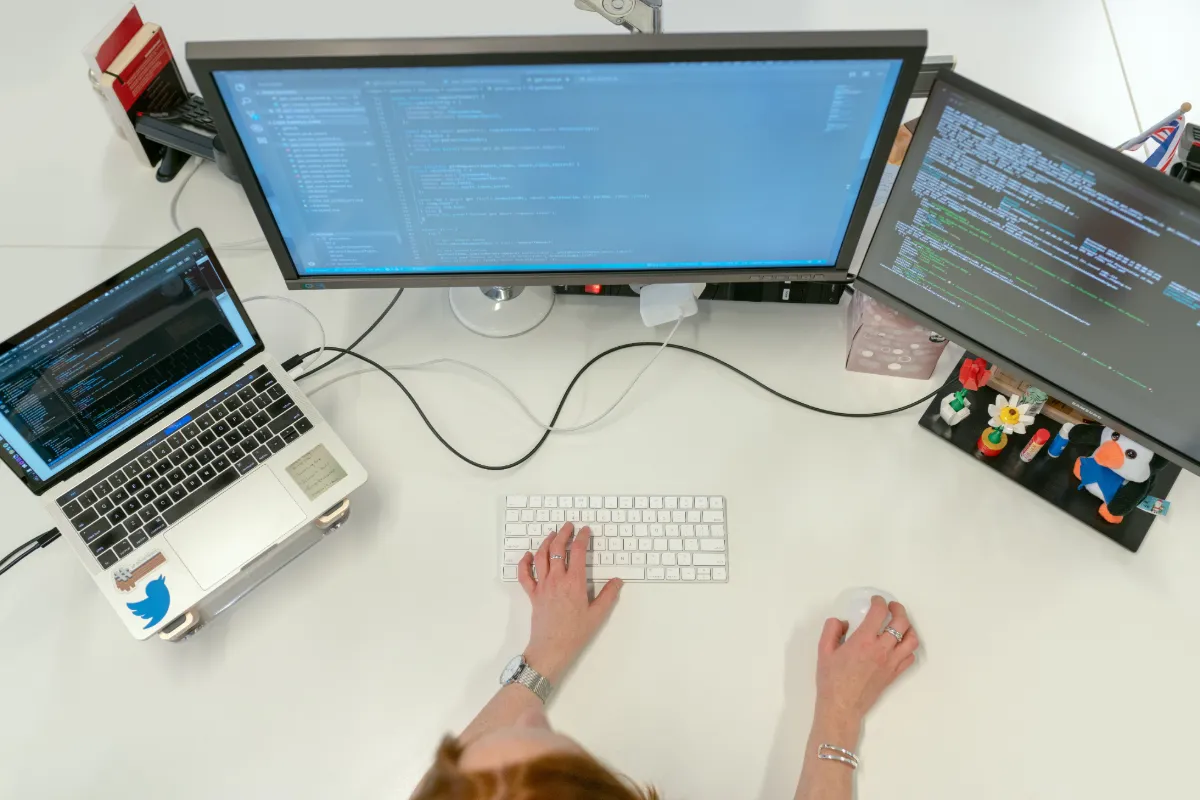
What that means in practice:
-
Safely freiberuflich: system architecture, backend and system-level development, IT consulting where you own the design, enterprise software engineering, administration of complex networks, data science with actual scientific method, AI/ML engineering, security architecture.
-
Often reclassified as a trade (Gewerbe): pure implementation of vendor software with no design authority, SAP parameterising with no architectural content, QA-only roles, end-user support, pure “staff augmentation” that looks like an employee, web design with no conceptual substance, reselling licences or hardware, publishing consumer apps, and — this one is spelled out in the 2014 BFH ruling — low-complexity “configuration and build management.”
A Bachelor’s or Master’s in Computer Science, Computer Engineering, Maths or Physics gives you a strong presumption of Freiberufler status as long as your work is engineering-typical. Self-taught? You can still get there, but you’ll usually need a Wissensprüfung (a knowledge audit) or an expert Gutachten (expert report) proving equivalence. Budget for that in advance — time and money — if you don’t have a technical degree. This is the exact same degree wall that stops self-taught folks on the Opportunity Card, by the way; Germany really does keep bumping into the piece of paper.
§21 vs the Blue Card (and the rest)
Let me be honest about something the freelance-visa blogs won’t tell you: if you have a job offer, the Blue Card is almost always the easier route. Faster, one clear salary number to clear, and permanent residence in 21 months with B1 German or 27 without. The Freiberufler visa only wins if you actually want to be self-employed. If you’re not sure yet, read the EU Blue Card guide first and come back.
| §21(5) Freiberufler | §18g EU Blue Card (2026) | §18a/§18b Skilled Worker | §20a Chancenkarte | |
|---|---|---|---|---|
| Relationship | Self-employed | Employee (binding offer) | Employee | Job-seeker |
| Qualification | Liberal profession + degree/equivalent | Degree or 3 yrs IT experience | Vocational training or degree | Points-based |
| Salary bar | None (cover your cost of living) | €50,700 general; €45,934.20 IT shortage | Customary wage, BA sign-off | Livelihood ≈ €1,091/mo |
| Initial length | Up to 3 years | Up to 4 years | Up to 4 years | 12 months |
| Permanent residence | 5 years (3 in some states, discretionary) | 21 mo (B1) / 27 mo | 3 years | Must switch |
What actually goes in the folder
For the German consulate back home (or, if you’re a visa-free national — USA, UK, Canada, Australia, NZ, South Korea, Japan, Israel — the local Ausländerbehörde after you arrive):
-
Passport with 12+ months left, ideally three years
-
Application form, biometric photos, cover letter, CV
-
Proof of qualification: diploma, transcripts, certs, portfolio; Anabin recognition where it applies
-
Finanzierungsplan — a 2–3 year revenue-and-cost projection with bank statements behind it. Berlin’s practice is that your projected monthly income should clear rent + health insurance + roughly €563 to live on
-
Letters of intent (Absichtserklärungen) from at least two prospective clients. German clients aren’t formally required under §21(5), but they massively help your odds — this is where a couple of signed contract roles or letters from German scale-ups earn their keep
-
Proof of health insurance valid in Germany (statutory or private)
-
Rental contract, Wohnungsgeberbestätigung (your landlord’s confirmation of your address, needed to register), Anmeldebestätigung (proof of address registration) once you’re here
-
Savings shown on statements — commonly €9,000–12,000; Berlin is more relaxed
-
If you’re 45+: proof of pension provision — roughly a private pension paying ~€1,612/month for 12+ years after 67, or about €232,000 in business assets (that’s the Berlin benchmark; Turkish, US and Japanese nationals, among a few others, are exempt via bilateral treaties)
-
Fee €100 (€37 for Turkish nationals under the Association Agreement)
Timeline, and the road to a permit that sticks
From abroad you apply through the German mission using the Auswärtiges Amt’s (Federal Foreign Office’s) digital Auslandsportal (its online visa-application portal). They forward your file to the competent Ausländerbehörde in Germany — reckon on 4–12 weeks in most markets. You enter on a national D-visa (3–6 months), do your Anmeldung (address registration) within 14 days, and swap it for the electronic residence permit (eAT) at the local office. That whole post-arrival scramble — Anmeldung, Steuer-ID (your permanent personal tax ID), bank, Krankenkasse (health-insurance fund), eAT — is the same marathon every new arrival runs, and I wrote a week-by-week first-90-days checklist for exactly it.
The first permit is usually three years. Renewal wants ongoing freelance income, continuous health insurance, a clean tax record (your Steuerbescheid), and documented pension contributions. Permanent residence (Niederlassungserlaubnis) legally needs five years under §9 AufenthG for a pure §21(5) freelancer — including 60 months of pension contributions, B1 German and a secured livelihood. A few offices (Berlin, notably) grant it after three years by analogy to §21(4), but that’s discretionary and I would never plan around it. Citizenship is now on the table after five years under the 2024 reform — the Blue-Card-to-citizenship timeline walks through that clock and it mostly applies to you too.
Registering with the Finanzamt (the tax office) — the one sentence that sets your tax life
Within one month of starting work you have to file the Fragebogen zur steuerlichen Erfassung (the tax-registration questionnaire) electronically through ELSTER (Germany’s official online tax portal). That’s been mandatory since 2021. The ELSTER certificate takes about two weeks to arrive by post, so start early or you’ll be blocked.
Now the sentence. There’s a free-text field, “Art der Tätigkeit” (“type of activity”). Write your work in engineering language:
“Konzeption, Modellierung und Entwicklung von Systemsoftware und IT-Architekturen” [“Conception, modeling, and development of systems software and IT architectures”] reads completely differently to a Finanzamt officer than “Programmierung” [“programming”] or “IT-Beratung” [“IT consulting”].
That one line can decide whether you land as a Freiberufler (filing Anlage S — the tax-return annex for freelance income) or a Gewerbetreibender (Anlage G — the annex for business income). Tick the self-employment box, not the business box, and give a realistic profit forecast — too low and you invite a Liebhaberei (“hobby”) review, too high and they hit you with aggressive advance payments before you’ve earned a cent.

Your Steuernummer (tax number) comes by post in 2–6 weeks (longer in Berlin and Munich, of course). The separate Steuer-ID (11 digits, for life — your permanent personal tax ID) shows up automatically after your Anmeldung — same one every employee gets. If you’ll invoice EU B2B clients, also grab a USt-IdNr. (VAT ID) from the Bundeszentralamt für Steuern (Federal Central Tax Office); it’s free and takes a week or two.
One 2025 change that’s still in force for 2026: every new German business now defaults to Kleinunternehmer status (a small-business exemption from charging VAT) under the reformed §19 UStG (the VAT Act, Umsatzsteuergesetz). You can opt out in the Fragebogen if you expect a lot of input VAT or you just want to look “standard” to corporate clients — but opting out binds you for five years, so think first. The thresholds for 2026 are €25,000 net in the prior year and €100,000 net in the current year; cross €100,000 mid-year and the exemption dies on the invoice that tips you over.
What you’ll actually bill: 2026 day rates by specialty 💶
Right, the part everyone scrolls to. These numbers are my synthesis of the big German freelance surveys for 2025–2026 (the Freelancer-Kompass, the freelance.de study, GULP’s rate data, Hays’ skills reports) plus what my two contractor friends and the DMs tell me. All figures are net of VAT, for an 8-hour billable day, Germany only — Switzerland pulls DACH averages up and it’s misleading.
The honest headline for 2026: hourly rates hit an all-time high of about €104 in 2025 and then did something they hadn’t in a decade — they dipped, to around €103. Basically flat. But monthly revenue fell about 17% (from ~€8,022 to ~€6,653) because people are billing fewer days. Roughly half of freelancers report a worse order situation, a big chunk have no secured utilisation, and more than a quarter now need over three months to land a new project. The market isn’t collapsing. But 2026 is a buyer’s market, and I’d plan around 180 billable days, not 200.
| Specialty | Median 2025 €/day | Typical range | Top expert | Direction |
|---|---|---|---|---|
| Backend – Java | 760 | 640–944 | 1,200 | Flat |
| Backend – Python | 760–800 | 640–960 | 1,200 | Rising (AI-adjacent) |
| Backend – Go | 800–880 | 720–1,040 | 1,200+ | Rising (scarce) |
| Backend – Node.js / .NET | 720–760 | 560–880 | 1,100 | Flat |
| Frontend – React/Vue/Angular | 680–720 | 520–880 | 1,050 | Flat |
| Full-stack | 760 | 600–920 | 1,100 | Flat |
| DevOps / SRE / Platform | 840 | 720–1,040 | 1,300 | Rising |
| Kubernetes / Cloud senior | 880–920 | 800–1,080 | 1,350 | Rising |
| Cloud architect | 920–960 | 800–1,100 | 1,400 | Rising |
| Mobile – iOS/Android | 720 | 560–880 | 1,050 | Softening |
| Data Science / ML Engineer | 800–840 | 720–1,040 | 1,300 | Rising |
| AI / LLM / MLOps | 880–960 | 800–1,150 | 1,400 | Strongly rising |
| Data Engineering | 800 | 720–960 | 1,200 | Rising |
| SAP ABAP developer | 840 | 720–960 | 1,150 | Flat |
| SAP S/4HANA consultant | 960–1,016 | 880–1,200 | 1,500+ | Flat (deadline floor) |
| Software / Solution Architect | 792 | 680–960 | 1,200 | Flat |
| Tech Lead (contract) | 880–960 | 800–1,150 | 1,400 | Flat |
| Cybersecurity / Pen Test | 880–960 | 760–1,200 | 1,500 | Rising |
| Salesforce consultant | 840–920 | 720–1,040 | 1,300 | Flat |
| QA / Test Automation | 680–720 | 560–880 | 1,000 | Softening |
What that means over a year
The surveys put actually invoiced days at around 173/year for the average freelancer, against a planning convention of 180 (conservative) to 200 (well-booked senior). The people clearing 200 are almost always in SAP S/4HANA, AI/LLM or cloud architecture — pipelines that are demand-saturated right now.
| Specialty (median €/day) | At 180 days | At 200 days |
|---|---|---|
| Market average, all IT (€832) | €149,760 | €166,400 |
| Java/Python/.NET backend (€760) | €136,800 | €152,000 |
| DevOps/SRE/Platform (€840) | €151,200 | €168,000 |
| AI/MLOps niche (€920) | €165,600 | €184,000 |
| SAP consultant overall (€933) | €167,940 | €186,600 |
| SAP S/4HANA senior (€1,000) | €180,000 | €200,000 |
| Expert/architect top-end (€1,400) | €252,000 | €280,000 |
Rough seniority ladder for 2026: juniors (0–5 yrs) around €500–680/day; mids (5–10) €700–880; seniors (10–20) €880–1,100; experts and architects €1,100–1,600+. My blunt take: if you’re a senior pricing under €700/day in 2026, you’re leaving money on the table. If you’re pricing over €1,000 without a hot specialty (AI, cloud architecture, S/4HANA), expect a longer sales cycle — the buyer’s market is real this year.
The tax side, without the fog
I’m going to keep this practical. I’m a backend engineer, not a Steuerberater (tax advisor), and above a certain income you should just hire one — a good one who does international freelancers pays for themselves. But you should understand the shape of it.
Income tax (Einkommensteuer)
The 2026 Grundfreibetrag (tax-free slice) is €12,348 for singles (€24,696 joint), up from €12,096. The 42% rate now starts at €69,879 (nudged up for inflation), and the 45% Reichensteuer (the top bracket, literally “rich tax”) still starts at €277,826.
| Zone (single) | Taxable income | Marginal rate |
|---|---|---|
| Tax-free | €0 – €12,348 | 0% |
| First zone | €12,349 – €17,799 | 14% → 24% |
| Second zone | €17,800 – €69,878 | 24% → 42% |
| Spitzensteuersatz (top marginal rate) | €69,879 – €277,825 | 42% |
| Reichensteuer | ≥ €277,826 | 45% |
The Soli (solidarity surcharge) is 5.5% of your assessed income tax, but only kicks in above a threshold of about €20,350 of assessed tax for singles in 2026 — roughly 90% of filers don’t pay it any more, but a well-booked senior freelancer with €100k+ taxable absolutely will. Kirchensteuer (church tax, 8–9%) only applies if you’re registered with a recognised church; most of us in tech aren’t, and don’t. Same schedule as employees — so you can model your own rough take-home in the Germany tax calculator, just remember it assumes salaried social contributions, which for you work differently (see below).
VAT (Umsatzsteuer)
Standard rate is 19%. For a software freelancer the question that matters is place of supply:
-
German B2B client: 19% on your invoice; they reclaim it as input tax.
-
EU B2B client with a valid VAT ID: supply shifts to their country (§3a(2) UStG). You issue a net invoice with the note “Steuerschuldnerschaft des Leistungsempfängers / Reverse Charge” and report it in the Zusammenfassende Meldung (the EU recapitulative statement / EC sales list).
-
Non-EU B2B (US, UK, Switzerland): net invoice, no German VAT, no ZM.
-
German B2C: 19% applies.
VAT returns (Voranmeldungen) are monthly if last year’s VAT bill topped €9,000, quarterly between €2,000 and €9,000, annual below €2,000. The old “monthly for your first two years” rule for founders stays suspended through 2026.
Trade tax (Gewerbesteuer) — the Freiberufler’s whole advantage 🎯
Here’s the money reason to protect your Freiberufler status: true Freiberufler pay no Gewerbesteuer at all. A Gewerbetreibender pays (profit − €24,500) × 3.5% × the municipal Hebesatz (the local trade-tax multiplier), and the city rate really moves the needle — Berlin 410%, Munich 490%, Frankfurt 460%, Hamburg 470%. Most of it is creditable against your income tax (§35 EStG), which fully neutralises the burden up to a Hebesatz of about 400% — but Munich, Frankfurt and Hamburg all sit above that, so there’s real leftover cost. Staying properly classified as Freiberufler is easily worth €5,000–€15,000/year at senior revenue in those cities. (If you’re weighing where to base yourself, the tax rate is one more input in the Berlin vs Munich vs Hamburg decision.)
Reclassification risk is highest when you have no CS/engineering degree and no Wissensprüfung, your work is pure implementation with no architecture, you resell hardware or third-party licences, or your activity touches advertising, brokerage or consumer products. And this is the scary bit: a Finanzamt audit (Betriebsprüfung) can reclassify you retroactively — four years normally, ten in bad-faith cases — which means years of back-payable trade tax and IHK dues in one letter. Worse for us visa-holders: your §21(5) permit is built on Freiberufler status, so a reclassification can drag your residence permit into it too.

One more trap if you ever partner up: the Abfärbetheorie (“infection doctrine” — a sliver of commercial income taints the whole partnership) (§15(3) Nr. 1 EStG). It hits Personengesellschaften (partnerships) — a GbR (a simple civil-law partnership) or a PartG without mbB (a professional partnership without limited liability) — not sole traders. Run a GbR where even a sliver of income is gewerblich (commercially classified, rather than freiberuflich), and all of the partnership’s income becomes gewerblich (unless the gewerblich part stays under 3% of turnover and €24,500). Two people who both want Freiberufler status should look at a Partnerschaftsgesellschaft mbB (a partnership company with limited professional liability) or just keep separate sole proprietorships. Solo? You can ignore this whole paragraph.
EÜR and advance payments
As a Freiberufler you can use the cash-basis Einnahmenüberschussrechnung (EÜR — income-surplus statement) at any revenue level — no double-entry bookkeeping. You file Anlage EÜR through ELSTER with your annual return, due 31 July of the following year (later with a Steuerberater). Keep your accounting documents eight years now (shortened from ten).
Vorauszahlungen — quarterly advance payments on 10 March, June, September, December — are set from your last assessed income tax. When your revenue drops (and in this market it might), write to the Finanzamt and ask them to lower it, with a current BWA (a standard business-financial summary report). Otherwise you’re lending the state money for free while it charges you interest on any final shortfall.
Expenses actually worth tracking
-
Homeoffice-Pauschale (home-office flat-rate allowance): €6/day up to 210 days = €1,260/year, no dedicated room needed.
-
Arbeitszimmer (a dedicated home-office room): full pro-rata (rent, utilities, depreciation) if a separate room is the centre of your work — which it is for most fully-remote freelancers. Or take the €1,260 flat rate.
-
Hardware & software: since the 2022 BMF rule, laptops, peripherals and standard software are fully expensable in the year you buy them, whatever the cost.
-
Coworking, SaaS, GitHub, JetBrains, AWS, conferences, technical books: 100%.
-
Business meals: 70% deductible (100% of the VAT reclaimable on a proper Bewirtungsbeleg — an itemized business-meal receipt). Client gifts: up to €50 net per person per year.
-
Phone/internet: 20% without any documentation; more with a usage log.
-
Insurance as Sonderausgaben (a “special expenses” tax-deduction category): your base health + long-term-care contributions are fully deductible; Rürup contributions up to €30,826 (single). This matters a lot in the freelance-vs-employee maths later.
Scheinselbstständigkeit (bogus / false self-employment) — the thing that actually ends freelance careers ⚠️
If you take one warning from this whole article, take this one. German social-insurance law sorts you into three boxes, and landing in the wrong one is the fastest way to blow up a freelance career:
-
A genuine freelancer owes no social insurance (bar a few regulated professions).
-
A Scheinselbstständiger is a fake freelancer — really an employee in disguise. If they decide you’re this, your client owes the full ~40% employer+employee social contribution retroactively for up to 4 years (30 in intentional cases), plus 12%/year late penalties, plus possible criminal exposure under §266a StGB (the Criminal Code provision on withholding social-security contributions). No client wants that risk, which is why they’ll drop you the moment it smells wrong.
-
An arbeitnehmerähnlicher Selbstständiger is a real freelancer who’s economically dependent on one client — genuine, but owes statutory pension contributions.
The 5/6 rule
Under §2 S.1 Nr.9 SGB VI (Book VI of the Social Code, Sozialgesetzbuch — Germany’s pension-insurance law): if you pull more than 5/6 of your income from a single client in a calendar year and employ no one above the minor-employment line (€556/month), you become mandatorily insured in the statutory pension scheme — paying both halves (18.6% up to the 2026 ceiling of €101,400). New founders can apply for a three-year exemption under §6 SGB VI, usable twice in a lifetime. This one is a numbers game — watch your client mix across the year, not just today.
The fuller Scheinselbstständigkeit picture
5/6 is only one signal. The DRV (Deutsche Rentenversicherung, Germany’s pension-insurance authority) and the social courts do a Gesamtwürdigung — a whole-picture assessment — looking for:
-
Weisungsgebundenheit — being told when, where and how to work
-
Eingliederung — being folded into the client’s org (company email, a badge, standups, showing up on the org chart)
-
Fixed hours, attendance duties, vacation you have to coordinate
-
Working on client equipment in client offices with no infrastructure of your own
-
No entrepreneurial risk — a fixed hourly rate paid no matter the outcome, nothing of yours at stake
-
No own employees, no own marketing, no clients beyond the one
How you defend your status
The seniors who freelance for years do this on purpose: two or more concurrent clients, none above ~70% of turnover; your own laptop and phone in your name; a coworking or dedicated-home-office contract; a business website and invoices under your own brand; documented acquisition (the leads you turned down, proposals, LinkedIn outreach); a professional-liability policy; and project contracts with real deliverables instead of open-ended hourly bodyshopping.
If you’re starting with a single client and you have any doubt, file a Statusfeststellungsverfahren (a formal status-determination request) under §7a SGB IV (Book IV of the Social Code) within your first month. Do it early and §7a(6) protects you: any later adverse decision only bites going forward, not retroactively. And don’t kid yourself that working from home fixes it — a 2020 Hessen Landessozialgericht (Hesse State Social Court) case ruled a programmer working 100% from home for a single client to be sozialversicherungspflichtig (legally subject to mandatory employee social-insurance contributions). Flexibility of location isn’t the same as independence. Not a grey area. Plan for it.
Health insurance: no employer to split the bill 🏥
As a freelancer you pay 100% of your health insurance yourself — there’s no employer half. The choice between voluntary statutory (GKV — Gesetzliche Krankenversicherung)** and private (PKV — Private Krankenversicherung)** is one of the biggest calls you’ll make in Germany, because PKV is close to a one-way door.

GKV in 2026
Voluntarily-insured freelancers pay an income-based rate on your whole income (business profit plus rental, capital gains, etc. — not just freelance earnings). The 2026 pieces:
-
General rate 14.6% (with sick-pay from day 43) or reduced 14.0% (without)
-
Average Zusatzbeitrag (an additional contribution set by your insurer) 2.9% (your Kasse may sit a bit above)
-
Pflegeversicherung (long-term care insurance) 4.2% if you’re childless and 23+, 3.6% for parents
That’s an effective ~21.1–21.7%. The 2026 contribution ceiling is €5,812.50/month (€69,750/year), and the floor for freelancers is €1,318.33/month. In real money, contributions run from about €278/month at the floor to €1,261/month at the ceiling.
PKV — the trade-offs
Private premiums are age- and health-based, not income-based. A healthy 30-year-old can find a good tariff around €350–550/month; a 35-year-old at a top carrier lands near €800 with Krankentagegeld (daily sick-pay insurance). The industry average premium for 2026 is around €617/month. Coverage is often broader — private rooms, senior consultants, better dental — but it’s fixed to your tariff’s catalogue.
Three caveats I make everyone sit with before they switch:
- No free family insurance. Everyone needs their own contract. A family with two kids and a non-earning partner can hit €1,300–1,500/month — versus GKV, where the partner and kids ride along free on your single contribution. My wife and me think about this one a lot.
- Premiums climb with age, despite the Altersrückstellungen (the age-related reserves insurers build up to soften future increases), and jump in years when carriers reprice for medical inflation.
- Getting back into GKV after 55 is basically impossible (§6(3a) SGB V — Book V of the Social Code, covering health insurance). Before 55 you generally need a job below the JAEG (Jahresarbeitsentgeltgrenze — the annual income threshold for opting out of statutory insurance) (€77,400 in 2026), unemployment benefit, or family insurance via a GKV spouse.
My honest heuristic: young, single, high-earning, no kids on the horizon → PKV is the clear win, and the premium savings compound tax-deductibly for years. Planning kids, expecting bumpy income, or not sure you’ll stay in Germany long-term → default to voluntary GKV. Switching back is one of the most common regrets I hear from long-tenure freelancers, so treat it as a 10-year decision, not a this-year one.
Retirement: nobody sets it up for you
As an employee I don’t think about my pension — it just happens off my payslip. As a freelancer, nothing happens unless you make it happen. Most Freiberufler aren’t mandatorily in the statutory Deutsche Rentenversicherung. The exceptions (teachers, midwives, artists via the KSK, Handwerker, and the arbeitnehmerähnliche case from the 5/6 rule) rarely catch developers. The chamber Versorgungswerke (profession-specific pension funds run by professional chambers) cover architects, lawyers, doctors and — in some Länder — engineers, but we’re usually not members of an Ingenieurkammer (Chamber of Engineers), so that door’s shut too.
So it’s on you. The realistic options:
-
Voluntary DRV contributions (~€100/month up to the ceiling) buy you into the statutory system and earn Entgeltpunkte (pension points/credits). Handy because permanent residence wants 60 months of pension contributions anyway (§9 AufenthG) — so this pulls double duty.
-
Rürup (Basisrente — literally “basic pension”)**, built for the self-employed: 100% deductible as Sonderausgaben up to €30,826 single / €61,652 married in 2026. The price is total illiquidity — it only ever pays out as a lifelong annuity from 62 at the earliest, no lump sum, no inheritance except to spouse/kids. Finanztip and Stiftung Warentest generally only recommend Rürup for freelancers over ~50 on the top (42/45%) marginal rate.
-
ETF savings plans / private pension — fully flexible, no deduction on the way in. For younger freelancers this plus voluntary DRV is usually the better combo.
On the politics: a mandatory-pension rule for the self-employed has been “coming soon” since 2012 and, as of mid-2026, still isn’t law. The current coalition’s plan is an opt-out model (DRV or an insolvency-proof private equivalent) with a grace period for new founders, and existing freelancers are widely expected to be grandfathered. The new Altersvorsorgedepot (a new voluntary retirement-savings account, passed March 2026, open to the self-employed from 2027) is a voluntary Riester (a long-standing state-subsidized private pension scheme) successor — not an obligation. Don’t wait for the law; set something up now.

And don’t skip the boring policies: Berufshaftpflicht / IT-liability (€300–1,500/year, sometimes contractually required by enterprise clients); voluntary unemployment insurance via §28a SGB III (Book III of the Social Code, unemployment-insurance law) if you apply within three months of going self-employed (~€103/month, and it pays ALG-I on your qualification group regardless of your actual freelance income); and Berufsunfähigkeitsversicherung (occupational disability insurance), which is critical because a non-DRV freelancer has zero disability safety net by default.
A note on the Künstlersozialkasse (Artists’ Social Insurance Fund), if you’re tech-adjacent
Pure coding doesn’t get you into the KSK — it’s considered technical, not artistic. But the edges matter, because the KSK pays roughly the employer half of your health and pension contributions. UX/UI designers are usually eligible (theirs is gestalterische — creative/design — work); technical writers and developer-advocate content people qualify as publicists; game designers are case-by-case. If you sit on that boundary, the KSK can save you €500–600/month — it’s one of the highest-value applications a creative-adjacent freelancer here can make. Worth a serious look before you default to paying everything solo.
Freelance vs employment: the €85,000 question 🧮
This is the calculation I actually did for myself in 2024, so let me show it honestly. The trap in comparing them is that employees get a pile of socialised costs through their employer, and freelancers pay all of it alone. Rough rule: freelance billings of €110,000–120,000 ≈ a salaried €85,000 gross, because you’re eating the employer’s ~20% social share and the whole health premium yourself.
Employee — €85,000 gross, single, Tax Class I, Berlin, no church, GKV:
-
Income tax + Soli ≈ €20,500
-
Employee social insurance (pension, unemployment, health + Zusatz, care) ≈ €17,500
-
Roughly €47,000 net/year — plus employer-paid unemployment, pension accrual, 30-ish days paid vacation, 6 weeks sick pay, and dismissal protection
Freelancer — €115,000 billed (200 days × €575), Berlin, voluntary GKV, no church:
-
Business expenses (coworking, hardware, insurance, software): ≈ €8,000
-
Profit before personal deductions: ≈ €107,000
-
Voluntary GKV at the ceiling: ≈ €15,100
-
Rürup at ~10% of profit (optional): ≈ €10,700 → deductible
-
Taxable after Sonderausgaben: ≈ €81,200
-
Income tax + Soli: ≈ €23,500
-
Net cash after everything: ≈ €57,700 — plus whatever you funded through Rürup/ETF/DRV
So at that level freelancing throws off roughly €10,000/year more net cash plus €10,000+ in tax-advantaged retirement — call it a ~20% edge — in exchange for no paid sick leave (before day 43 if you took the reduced GKV rate), no employer pension, and the permanent vigilance of keeping your status clean. But watch what happens when it goes sideways: 173 actually-billed days at €575 is €99,475, and once you pay insurance out of that, you’re basically level with the employee — with none of the safety net. That gap, and the fact that I was moving with a partner who wasn’t earning yet, is why I took the salary. Your risk tolerance may be different.
Run your own version before you commit: model the salaried side in the net-salary calculator, read what developers actually take home and the €60k reality check for the employee baseline, and if you want the location freedom without the full freelance risk, remote roles in Germany are the hybrid middle path.
Freelancing clearly wins if you can hold 180+ billable days at €800+, you’re young and single, you value the autonomy and the rate leverage, and you plan to stay 3+ years. Employment wins if you’re relocating with dependents, you want the Blue Card’s fast-track PR, you’d rather have consolidated sick/vacation cover, or your specialty’s day rate sits below ~€600.
If you’re coming from outside the EU
The rules shift depending on where you’re applying from — both for the “stay home and invoice German clients” path (Scenario A) and the “actually relocate on §21” path (Scenario B). Five countries I get asked about most.
🇮🇳 India
Remote from India (A): no German tax residency if you’re under 183 days in Germany, and no German withholding on pure software services — German B2B clients self-assess VAT via reverse charge. Back home you likely qualify for §44ADA presumptive taxation (an Indian scheme taxing professionals on a deemed 50% profit margin, sparing detailed bookkeeping) under ₹75 lakh, and service exports are zero-rated for GST under the LUT route (Letter of Undertaking — lets exporters skip paying GST upfront and claiming it back). Wise, Payoneer, PayPal all work; FEMA (India’s Foreign Exchange Management Act) wants foreign-currency proceeds repatriated within ~9 months.
Relocating on §21 (B): apply at the missions in Delhi, Mumbai, Bengaluru, Chennai or Kolkata via VFS Global (an outsourced visa-application service provider). Realistically 8–12 weeks processing plus a 2–4 month appointment backlog in Mumbai and Delhi. India’s a Hague Apostille country now, so MEA apostille in Delhi is mandatory for diplomas, PCC and civil docs. The 1996 Germany–India DTA (Double Taxation Agreement) is fully in force (Article 14). One honest note from the DMs: because Indian IT folks overwhelmingly take the Blue Card, the §21 route is less trodden here — so bring a crisper business case than your Blue Card peers, the officers see fewer of these. (This is the one country section I can speak to personally, being from Pune — the document chain is the slow part, not the law.)
🇺🇦 Ukraine
Remote from Ukraine (A): the FOP (a simplified Ukrainian sole-proprietor business status) Group 3 simplified tax (5% of turnover + ЄСВ, Ukraine’s unified social contribution) is still the standard structure for German-facing Ukrainian freelancers; Diia.City (Ukraine’s special legal and tax regime for IT companies) offers a 5–9% PIT (personal income tax) regime. IT service exports are VAT-exempt. SWIFT/SEPA via Privatbank and Monobank works; Wise and Payoneer function. NBU (National Bank of Ukraine) martial-law rules want FX (foreign-exchange) proceeds back within 90 days.
Relocating (B): §21 is usually unnecessary. Ukrainian nationals get the EU Temporary Protection route, extended to 4 March 2027, which in Germany runs through §24 AufenthG: visa-free entry, register at the Bürgeramt (citizens’ registration office), and the permit includes self-employment rights automatically — no viability prognosis, no client letters, no interview. (Third-country nationals formerly resident in Ukraine can’t get new §24 titles since June 2024 and must use §21 or another route.) The 1995 Germany–Ukraine DTA is in force. Embassy Kyiv is running limited operations; many applicants route through Warsaw or Bratislava if lawfully resident there.
🇷🇺 Russia
Remote from Russia (A) — genuinely hard in 2026. Germany put Russia on its Steueroasen-Abwehrgesetz (Tax Haven Defence Act) blacklist from 1 January 2024, which triggers defensive measures like denied deductions for expenses paid to Russian recipients. The 1996 DTA is partially suspended (Russian Decree 585); Germany recognises the suspension of the core allocation articles, so double taxation is a live risk.
Banking is the deeper problem. Seven Russian banks are off SWIFT; Russian banks have been out of SEPA since 2022; Wise blocked all Russia-origin transfers in August 2025 under the 19th sanctions package; Revolut began mass-freezing accounts of Russian/Belarusian citizens without EU residency in late 2025; PayPal and Payoneer left in 2022. Most Russian freelancers serving German clients now route through UAE, Armenia, Georgia, Serbia or Kazakhstan residency and entities.
Relocating (B): national D-visas are processed only through Embassy Moscow — the consulates general closed visa work in 2023 — and enhanced security screening under §72 AufenthG routinely pushes it to 3–6 months or more. From the 2025/2026 turn Russians need biometric 10-year passports for Schengen. Many go through a German mission in a third country where they hold lawful residence. Even after arrival, a German bank account is hard: N26 and Deutsche Bank often reject Russian passports, while Sparkasse and bunq are the most accessible — and you have a statutory right to a Basiskonto (basic bank account) if refused.
🇧🇷 Brazil
Remote from Brazil (A): the odd one out — there is no DTA in force between Germany and Brazil (Germany terminated the old one in 2006; a replacement is reportedly back in negotiation but not signed as of mid-2026). Relief is unilateral via §34c EStG (German-side credit) and Brazilian reciprocity. Manageable for a plain service freelancer, but royalty/technical-service characterisation is a real risk — get advice. Most Brazilian IT exporters run a PJ (Pessoa Jurídica — a registered business entity, as opposed to invoicing as an individual) under Simples Nacional or Lucro Presumido (simplified Brazilian small-business tax regimes) for an effective ~13–16% rate. Wise, PayPal, Payoneer all work.
Relocating (B): the easiest of the five. Brazilians are visa-free for 90 days and, under §41 AufenthV (the Residence Ordinance, a companion regulation to the AufenthG), can apply for the residence title directly at the Ausländerbehörde after arrival — no consular pre-application needed. Consulates in São Paulo, Rio, Porto Alegre and Recife handle D-visas if you’d rather file at home. Apostille via Brazilian cartórios (notary offices); sworn translation required; processing ~6–12 weeks from biometrics; bank account straightforward.
🇹🇷 Turkey
Remote from Turkey (A): the 2011 Germany–Turkey DTA is in force (Article 14, 6-month service-PE — Permanent Establishment — rule); German reverse charge applies for B2B. Turkey offers an 80% corporate-income deduction on foreign IT-service earnings if proceeds are repatriated — one of the friendlier export regimes going. PayPal isn’t available in Turkey, but Wise and Payoneer work, and Garanti/Iş/Akbank have unrestricted SWIFT.
Relocating (B): apply at Istanbul (the big one), Ankara, Izmir or Antalya via iDATA (the visa-application service provider used by German missions in Turkey) — Istanbul waits run 2–6 months on volume. The 1963 Ankara Agreement standstill clause gives Turkish applicants residual protection against tightening of self-employment rules, enforced through ECJ case law. Fees are €37 for Turkish nationals, and — nice detail — Turkish nationals are exempt from the §21 age-45 pension requirement under the bilateral social-security treaty.
DTA (Double Taxation Agreement) summary
| Country | DTA in force? | Key article | 2026 status |
|---|---|---|---|
| India | Since 1996 | Art. 14; Art. 7 | Fully in force |
| Ukraine | Since 1997 | Art. 14; Art. 7 | In force (mostly moot under §24) |
| Russia | Since 1996 | Art. 14; Art. 7 | Partially suspended; on the StAbwG blacklist |
| Brazil | None | Terminated 2006 | No treaty; relief via §34c EStG only |
| Turkey | Since 2012 (retro 2011) | Art. 14; 6-mo service-PE | Fully in force |
So — is it worth it?
For the right person, yes, clearly. Germany’s Freiberufler regime is one of the better legal-tax-immigration combinations in the EU for an experienced non-EU developer — but it is expert mode. The three things that make it work: get your classification right with the Finanzamt from day one, keep your social-insurance status clean through genuine multi-client independence, and build retirement provision deliberately because nothing is automatic. The three things that break it: sloppy Fragebogen wording that triggers a Gewerbe reclassification, single-client setups that trip the 5/6 rule or full Scheinselbstständigkeit, and a PKV decision made for this year’s cash instead of the next twenty years'.

The 2026 market in one breath: flat rates, fewer billable days, longer sales cycles — a buyer’s market where AI/ML, cloud architecture, cybersecurity and SAP S/4HANA still have real pricing power and generic backend/frontend/mobile work is under pressure. Plan around 180 days, price at your specialty’s median rather than the top quartile, and land six months of runway before you relocate. And the single most useful thing you can do: in your first month here, file the Fragebogen in engineering language, file a preventive Statusfeststellung if you’re starting with one dominant client, and make your GKV/PKV call on a 10-year horizon. The ecosystem is mature and the good international-freelancer Steuerberater are plentiful — the rules just reward people who engage with them on purpose.
I took the salary. But if I were single and 27 again, with a Go or S/4HANA specialty and a year of runway? I’d probably be writing this as one of my own case studies.
Leaning this way? Check what you qualify for in the visa checker, model the salaried alternative in the calculator, then go browse freelance and contract roles, the high-paying (€70k+) collection and remote senior/lead roles. If you decide the employee route is safer after all, my 6-month relocation playbook runs from first application to your first Anmeldung.
The questions people actually ask me
Same handful, every week. Short answers.
Do software developers count as Freiberufler in Germany?
Usually yes — but by analogy to the engineer, not automatically. Your work has to be engineering-typical (design, architecture, complex systems) and you need degree-equivalent knowledge. A CS/maths/engineering degree gives you a strong presumption; self-taught devs often need a Wissensprüfung or a Gutachten. Pure implementation, config work or reselling licences gets reclassified as a trade (Gewerbe).
Can I freelance in Germany on a Blue Card or the Chancenkarte?
Not as your main gig. The Blue Card ties you to your employer; the Opportunity Card explicitly bans self-employment (§20a). To freelance you need the §21 permit. Quietly freelancing for a German client on the wrong permit is a compliance problem, not a loophole — don’t.
How much do freelance developers charge in Germany in 2026?
Median day rates sit around €760 for backend, €840 for DevOps, €920+ for AI/cloud architecture and €1,000+ for SAP S/4HANA — net of VAT, for an 8-hour day. Seniors realistically clear €700–1,100/day. Just plan around ~180 billable days, not 200; utilisation, not the rate, is where 2026 hurts.
Do I have to charge VAT as a freelancer?
Depends. New businesses now default to Kleinunternehmer status (no VAT charged) under €25,000/€100,000 thresholds. German B2B clients: 19%. EU B2B with a VAT ID: reverse charge, net invoice. Non-EU B2B: net, no German VAT. Many devs opt out of Kleinunternehmer to reclaim input VAT and look “standard” to corporates — but that binds you for five years.
GKV or PKV as a freelancer?
Young, single, high-earning, no kids coming → PKV usually wins on cost. Planning a family, expecting variable income, or unsure you’ll stay long-term → default to voluntary GKV, because getting back into GKV after 55 is close to impossible. Treat it as a 10-year decision.
What’s the fastest way to lose Freiberufler status?
One dominant client that looks like employment. Watch the 5/6 income rule, keep two-plus real clients, use your own kit, invoice under your own brand, and if you’re starting with a single client, file a Statusfeststellungsverfahren in your first month so any later ruling only applies going forward.
Official resources
-
§21 AufenthG — residence permit for self-employment: gesetze-im-internet.de (Federal Ministry of Justice)
-
§18 EStG — definition of the liberal professions (Freiberufler): gesetze-im-internet.de
-
§19 UStG — Kleinunternehmer rule: gesetze-im-internet.de
-
§2 SGB VI — mandatory pension for the self-employed (the 5/6 rule): gesetze-im-internet.de
-
§7a SGB IV — status determination (Statusfeststellungsverfahren): gesetze-im-internet.de
-
Make it in Germany — self-employment visa: make-it-in-germany.de (Federal Government portal)
-
ELSTER — the online tax portal (Fragebogen zur steuerlichen Erfassung): elster.de
-
Bundeszentralamt für Steuern — VAT ID & reverse charge: bzst.de
-
Deutsche Rentenversicherung — self-employed & voluntary contributions: deutsche-rentenversicherung.de
-
Künstlersozialkasse — eligibility for creative-adjacent freelancers: kuenstlersozialkasse.de
These are my own notes and opinions from doing the German move as an employee and helping a lot of freelancers-to-be through the paperwork — they are not legal or tax advice. I’m a backend engineer, not a Steuerberater or a Fachanwalt für Migrationsrecht (migration-law specialist attorney). The figures here are the 2026 numbers I’ve got, and German tax, social-insurance and immigration rules genuinely change mid-year — so confirm the current ones with your Finanzamt, the German mission for your country, and a good Steuerberater who handles international freelancers before you file anything. Especially the classification question: get that one professionally checked, it matters more than anything I wrote here. 🙂