
 Arjun Patel
Quick story before the checklist. When my wife and me landed our stuff in Munich at the start of 2024, I thought the hard part was over. I had the job, I had done the visa dance once already in Amsterdam, how bad could a second country be. 😅 Then I spent the next three months in a queue. A queue for the Bürgeramt, then a queue for the tax office, then a Krankenkasse form that wanted a number I didn’t have yet, which needed another number that needed the first appointment I still couldn’t book. German admin is not hard exactly. It’s just a chain, and if you do step 4 before step 2 you go back to the start.
So this is the thing I wish somebody had drawn for me on day one — a week-by-week order for your first 90 days, written for English-speaking tech people landing on a Blue Card or Chancenkarte in Berlin, Munich, Hamburg, Frankfurt, Leipzig or Cologne. One honest caveat: I came over from the Netherlands, not straight from outside the EU, so my entry was a bit different. But the Munich bureaucracy marathon after arrival was the same one everyone runs, and half my team did the full D-visa version — so I’ve watched both up close. Every fee and threshold below is a 2026 number, and Germany loves to change these mid-year, so check the official portals before you act on anything that matters.
First things first. If you don’t have the offer or the visa sorted yet, start with my 6-month relocation playbook and the EU Blue Card 2026 guide — that’s the before-you-land half. This article is the after-you-land half. Not sure you even qualify? The visa checker screens you in about a minute. (And every German word in here is decoded in the glossary right at the end — skim it now if the nouns start blurring.)
The chain, and why the order is everything
Picture German bureaucracy as a dependency graph, because that’s what it is:
Anmeldung → Steuer-ID → bank account → health insurance → residence permit (eAT) → SCHUFA → flat / phone contract.
The Anmeldung (registering your address) is the root node. Almost nothing downstream works without the little certificate it gives you. So your whole first-week job is basically one thing: get the appointment, get the landlord’s confirmation, walk out with the paper. Everything else unlocks from there.
1. Anmeldung — registering your address 🏠
By law (the Bundesmeldegesetz) you register at your local Bürgeramt / KVR within 14 days of moving in (Bundesmeldegesetz). In practice nobody I know got fined for missing it, because the cities literally can’t hand out appointments fast enough to meet their own deadline. Don’t relax though — you want this paper fast not because of the fine, but because it’s the key to everything else.
What to bring (2026)
- Passport (and national ID card if you have one)
- The filled-in Anmeldeformular — download it from your city’s portal before you go, don’t rely on a printer being there
- The Wohnungsgeberbestätigung (WBS) — a short form your landlord or main tenant signs to confirm your move-in date. Your rental contract does not replace it. Learned this the annoying way.
- Marriage certificate + kids’ birth certificates (apostilled / translated) if you’re registering a family
- Your visa or residence permit if it was already issued abroad
Your landlord has to give you the WBS within two weeks — refusing is actually illegal and can cost them up to €1,000. If yours is slow, quote that politely and it tends to appear.
What you walk out with
The Meldebescheinigung. This is the single most important piece of paper in your German life, I’m not exaggerating. It unlocks your Steuer-ID, your residence-permit appointment, most bank accounts, the final step of health insurance, phone contracts, and flat applications. Make three copies and scan it.
City by city — the booking reality (2026)
| City | Office | Booking portal (official) | Typical 2026 wait | Note |
|---|---|---|---|---|
| Berlin | Bürgeramt (56 of them) | service.berlin.de | 2–6 weeks; walk-ins at outer districts | Since late 2024 there’s an online Anmeldung without an appointment for many cases — check that first |
| Munich | KVR Bürgerbüro (6 branches) | muenchen.de | 6–12 weeks (it used to be 3–6 months) | Refresh early morning; book any branch citywide |
| Hamburg | Hamburg Service vor Ort | serviceportal.hamburg.de | 1–5 weeks | New slots drop daily at 07:00 and 10:00 |
| Frankfurt | Bürgeramt (central + branches) | frankfurt.de | 2–6 weeks | Monday + Wednesday are walk-in days at main offices |
| Leipzig | Bürgerservice | leipzig.de | 1–3 weeks (fastest of the six) | New appointments daily at 17:00 |
| Cologne | Kundenzentrum | stadt-koeln.de | 3–6 weeks | Check all nine district offices |
⚠️ Munich-specific, because that’s where I sat: the KVR portal shows nothing, then at some random refresh a slot appears six weeks out, and if you blink it’s gone. Set an alarm, be logged in, and book literally any branch — they’re equivalent. My first Termin I brought a German-speaking colleague along, because the clerk did not switch to English even once. If you have a Berlin reader here: avoid Mitte and Friedrichshain-Kreuzberg, use “Termin berlinweit suchen”, and Spandau / Marzahn / Reinickendorf usually have slots.
If the slot is weeks away — don’t freeze your life
- Keep refreshing early morning and late evening. Cancellations really do appear.
- Call 115, the citizens’ hotline (German). Sometimes they have slots the portal doesn’t show.
- Email the specific office, mention any visa deadline. It creates a paper trail that can protect you from a fine.
- Start your bank, health insurance and SIM with the fintech bridges below. You do not have to wait for the Anmeldung to do those. This was the bit that saved my sanity.
2. Opening a German bank account 💶
You want a German IBAN before your first payroll run, otherwise payroll either delays you or sticks you on the worst tax withholding. Good news: a few places onboard you before you even have an Anmeldung.
| Bank / fintech | Before Anmeldung? | English | SCHUFA needed? | Note |
|---|---|---|---|---|
| N26 | ✅ Yes | ✅ Full English app + support | ❌ No | Fastest; video-ID from your sofa; works from almost any German address |
| Wise (not a full bank) | ✅ Yes | ✅ | ❌ No | German IBAN bridge, great if you juggle currencies |
| Revolut | ✅ Yes (Lithuanian IBAN, most employers accept it) | ✅ | ❌ No | Works as a bridge; some landlords still want a DE IBAN |
| Commerzbank | ⚠️ Sometimes | Partial | Yes eventually | Branch visit often works pre-Anmeldung, but it varies a lot |
| Deutsche Bank | ⚠️ Sometimes | Partial | Yes | May take a temporary address; branch interview |
| Sparkasse | ⚠️ Depends on the branch | Limited | Yes | Very local, expect German-only |
| DKB | ❌ Usually not | German only | Yes | Often EU-citizens / permanent residents only |
| ING | ❌ After Anmeldung | German-heavy | Yes | Popular once you’ve settled |
What I’d actually do, in order:
- Day 1–3: open N26 on your phone (or Wise / Revolut) so you have an IBAN to hand HR immediately. Side note since people ask — N26 is also one of the bigger English-first engineering shops in Berlin, so if you’re still hunting, their open roles are worth a look.
- Once Anmeldung + Steuer-ID land (week 4–6): add a “real” bank like Commerzbank or ING for broader ATM access, a proper credit card that builds SCHUFA, and frankly so landlords take you seriously.
- After ~6 months: if you want a free Visa with fee-free withdrawals abroad, DKB becomes realistic — by then your SCHUFA file exists.
3. Sperrkonto (blocked account) in 2026
Short version: Blue Card holders don’t need one. Your contract and a salary above the threshold are your proof of means (Make it in Germany).

Chancenkarte (Opportunity Card) people in 2026 usually do need one. Budget roughly €1,091/month × 12 ≈ €13,092 for a one-year card. The alternatives are a Verpflichtungserklärung (someone resident in Germany sponsors you) or a signed part-time contract.
Providers everyone uses: Coracle, Fintiba, Expatrio, Deutsche Bank. Setup runs about €49–€150 plus a small monthly fee. When your Chancenkarte converts to a Blue Card or §18b permit, you email the provider your new residence title, they unblock it, and the money lands in a normal account in 1–5 business days. Keep that confirmation letter — you may need to show it later.
4. Steuer-ID vs Steuernummer — don’t mix them up
These two trip up everybody, including me on the first phone call to HR.
| Steuer-ID (Steueridentifikationsnummer) | Steuernummer | |
|---|---|---|
| What it is | Your permanent 11-digit personal tax ID | A tax number for filing / freelancing |
| Who issues it | Bundeszentralamt für Steuern (BZSt) | Your local Finanzamt |
| When | Automatic after your first Anmeldung | When you file your first return or register self-employment |
| Looks like | 12 345 678 901 | 12/345/67890 |
| How long | 2–6 weeks by post | After you file |
Give your employer the Steuer-ID, not the Steuernummer. Without the Steuer-ID, payroll defaults you to Lohnsteuerklasse VI — the punitive “we don’t know who you are” class that holds back roughly 42–50% of your gross. My first Munich payslip was on Class VI because the letter hadn’t arrived, and seeing that number land was genuinely depressing for about a week. You get it all back when you file, but it’s cashflow pain you can dodge.
If it doesn’t show up in 6 weeks: walk into your Finanzamt with passport + Meldebescheinigung (they can often print it on the spot), use the official re-request form at the BZSt, or just check your first payslip / your ELSTER profile — it’s printed there too.
💶 Want to know what actually lands in your account once the right tax class kicks in? Run your number in the German net-salary calculator, and for the deeper math see what developers really take home and the €60K reality check. If filing in German scares you (it scared me), English-first tools like Taxfix do the annual return.
5. Krankenkasse — health insurance 🩺
Everyone resident in Germany must have health insurance, and here’s the catch that surprises people: you can’t be paid until you’re enrolled. Your employer needs a Mitgliedsbescheinigung (membership certificate) from your Krankenkasse within 14 days of your start date.
GKV (statutory) vs PKV (private)
- Under €77,400 gross/year in 2026 (the Versicherungspflichtgrenze) → you’re compulsorily in GKV (Make it in Germany).
- Over €77,400 → you may choose private (PKV). A lot of senior tech salaries clear this. PKV buys faster specialist access and private rooms, but it’s hard to undo after 55 and gets expensive with kids (no free family cover). I stayed GKV and have zero regrets so far.
The usual GKV options for expats (2026 rates)
| Krankenkasse | Total 2026 rate | Zusatzbeitrag | English support | Best for |
|---|---|---|---|---|
| TK (Techniker) | 17.29% | 2.69% | ✅ App, phone, online — 7 languages | The default for most tech folks |
| Barmer | 17.89% | 3.29% | ✅ English sign-up, Teledoktor | Families, mental-health programs |
| AOK (regional) | 16.9–17.6% | Varies | Partial, local | In-person service; AOK Bayern is solid |
| DAK | 17.4% | 2.8% | Limited | Bonus-program people |
I went TK on a colleague’s recommendation and the English flow really was the smoothest. The process: apply online, get the Mitgliedsbescheinigung (same day digital or a few days by post), forward it to HR, and then your Sozialversicherungsnummer gets generated automatically and mailed in 2–6 weeks. Physical card (eGK) lands in 2–4 weeks.
Free family cover (beitragsfreie Familienversicherung)
This one is genuinely great. A non-working or low-earning spouse and all kids under 23 (or 25 in education) are covered free under your policy. The 2026 income limit for the family member is €565/month (€603 for a mini-job). My wife was job-hunting our first months in Munich, so she was on my policy for free — you just fill a short Familienversicherung form on the Krankenkasse portal.
Heads-up: there was a reform debate in early 2026 about ending free spousal cover. Nothing passed when I last checked, but if you’re counting on it, keep an eye out.
6. Rundfunkbeitrag — the broadcast fee you didn’t ask for 📺
You did not sign up for this and you pay it anyway. One flat €18.36/month per household (not per person) funds ARD, ZDF and Deutschlandradio, frozen until at least 2027 by agreement of the 16 states (rundfunkbeitrag.de).
A few weeks after your Anmeldung a letter arrives from the ARD-ZDF-Deutschlandradio Beitragsservice — they pull your address straight from the Melderegister, you can’t hide. Register at the official portal, set up SEPA direct debit (saves postage and dodges the automatic late fee, minimum €8), and it bills quarterly at €55.08.
The flat-share trick: only one person per household pays. If you move into a WG, get the current payer’s Beitragsnummer and file an “Abmeldung wegen Doppelzahlung” so you’re not billed twice. Worth doing — I’ve seen people pay double for a year because nobody told them.
7. Deutsche Rentenversicherung — pension
Good news, mostly hands-off. Your employer signs you up automatically once you start and give your SVNR (Deutsche Rentenversicherung). Since 2023 they pull the number from the pension data centre via payroll, and if you don’t have one yet they request it for you. The Rentenversicherungsnummer (looks like 12 123456 A 123) arrives 2–6 weeks after your Krankenkasse enrollment. If it’s not there after 6 weeks, walk into a Deutsche Rentenversicherung branch with passport + Meldebescheinigung and they issue it on the spot, no appointment.

One thing for people on assignment: Germany has totalization agreements with the US, UK, India, Canada, Australia, Japan, South Korea and more, so you don’t pay pension twice during a short posting. On a normal local contract you just pay in. On a time-limited assignment from a foreign parent, ask HR about a Certificate of Coverage (US) / A1 (EU). Being from Pune originally, the India agreement is the one I checked first — worth knowing your years can count across systems.
8. Ausländerbehörde & the electronic residence permit (eAT) 🛂
Only non-EU workers do this part. If you entered on a D-visa with a Blue Card stamp, you still have to convert it into the elektronischer Aufenthaltstitel (eAT) — the credit-card-sized chip card — at your local immigration office. This was my own most stressful bit, because the German application was completely fresh (my Dutch time didn’t carry over — but that’s a different story, told in the Germany vs Netherlands piece).
2026 Blue Card salary thresholds
- General: €50,700 gross/year
- Shortage jobs (IT, engineering, medical…): €45,934.20 gross/year
- IT specialists with 3+ years of relevant experience can qualify without a degree (Make it in Germany) — the Blue Card guide covers this no-degree route in detail.
Booking & waits (2026)
| City | Office | Portal | Typical wait |
|---|---|---|---|
| Berlin | LEA (Landesamt für Einwanderung) | service.berlin.de | Apply online → reply in 4–12 weeks → appointment later |
| Munich | KVR Ausländerbehörde | muenchen.de | 4–8 weeks; emergency Nottermin drops daily |
| Hamburg | Amt für Migration | welcome.hamburg.de | 4–10 weeks; use the skilled-worker desk |
| Frankfurt | Ordnungsamt – Ausländerangelegenheiten | frankfurt.de | 4–10 weeks |
| Leipzig | Ausländerbehörde | leipzig.de | 2–6 weeks (shortest of the six) |
| Cologne | Ausländeramt | stadt-koeln.de | 4–10 weeks |
Processing after you submit is usually 4–12 weeks, and the actual card is printed by the Bundesdruckerei in Berlin, so add another 4–6 weeks for production and post. Some cities mail it, some make you collect it with a separate PIN letter — Munich made me come in.
Documents for a Blue Card appointment: passport + current visa/stamp, Anmeldebestätigung, employment contract with salary + job description, your degree with ZAB/Anabin recognition (or, if you’re the no-degree IT route, CV + proof of 3+ years), health-insurance confirmation, biometric photos (the on-site machines usually work), the application form, and ~€100 in fees. For a Chancenkarte → Blue Card conversion, bring all that plus your previous residence title, and if the job is below the Blue Card threshold, the Bundesagentur für Arbeit approval letter for a §18b permit.
The bridge document: Fiktionsbescheinigung
If your D-visa is about to expire and the eAT isn’t ready, the office issues a Fiktionsbescheinigung under §81 AufenthG that keeps you legal in the gap (AufenthG §81). With it you can keep working under your existing permission and travel inside Schengen (confirm with the issuing office — outside Schengen is risky, sometimes flat-out forbidden). What it usually won’t let you do: start a totally new job category or go self-employed unless it explicitly says so.
What you CAN do before the eAT lands: work (if your D-visa had the work stamp), open bank accounts, do health insurance, sign most contracts, travel in Schengen on the D-visa. What waits: long-haul travel out of Schengen (re-entry without the card is fragile), family reunification, and some landlords who insist on seeing the physical card.
Once that card is in your hand, the clock toward permanent residence and the German passport starts ticking. I’m grinding through B1 German right now for exactly that — the timeline is mapped in Blue Card to German citizenship.
9. Führungszeugnis — certificate of good conduct
The German police-clearance extract. Not every tech job needs it, but finance, insurance, anything childcare-adjacent, public sector and some regulated security shops will ask.
- Cost: €13, online or at a Bürgeramt (Bundesamt für Justiz)
- Time: 1–2 weeks online, 2–4 weeks by post
- How: online at fuehrungszeugnis.bund.de — but you need your activated online-ID (the eAT’s eID chip for non-EU residents), an NFC phone and the AusweisApp. Honestly, until your eAT arrives, it’s easier to just walk into a Bürgeramt.
Pick the right Belegart: N (Privatführungszeugnis, mailed to you, you hand it to the employer) for almost every private tech job, or O (Behördenführungszeugnis, sent straight to an authority) only when the recipient is a public body. There was a 2026 bill for a fully digital Führungszeugnis aimed at late 2026, but until that’s live, the green-paper certificate is what counts.
10. SCHUFA — building a credit file from zero
SCHUFA is Germany’s credit bureau, and on arrival you have no file at all — which over here reads as “unknown, so risky.” Where it actually bites is the unfurnished, long-term flat: for one of those the Makler wants a SCHUFA Bonitätsauskunft next to your payslips, and a foreigner with no file loses to a local with a boring-but-positive one every time. A furnished or temporary place is a different story — those go through on payslips and bank statements, no SCHUFA needed — but for a normal long lease you want a file, and you want it building from week one.
As of March 2026 SCHUFA moved to a more transparent scoring model under GDPR rules, and you can finally see your score online via eID — no more three-week postal wait for a basic check.
How to build a clean file, fast:
- Open a German current account (N26 or Commerzbank) — bank accounts register with SCHUFA automatically.
- Get a German credit card and pay it off in full every month. Fastest way to build positive history.
- Sign a postpaid phone contract (not prepaid) — every on-time month is a positive mark.
- Pay everything by SEPA Lastschrift. One unpaid bill going to Inkasso (collections) can wreck a young file for years.
- Avoid “Kreditanfrage” inquiries — ask for a “Konditionsanfrage” instead, which is SCHUFA-neutral.
Once a year you can pull a free Datenkopie (Art. 15 GDPR) from SCHUFA — read it, dispute mistakes in writing. The formatted Bonitätsauskunft (about €30) is the one Maklers actually ask to see, so budget for one around flat-hunting time.
11. SIM card & mobile contract 📱
German postpaid contracts want an Anmeldung address and usually a SCHUFA score — neither of which you have on day one. So you start prepaid, sold at basically every supermarket and drugstore.
| Provider | Network | Note |
|---|---|---|
| Aldi Talk | O2 | Cheapest, ~€8.99 for 10 GB (28-day cycle), buy it at Aldi |
| Lidl Connect | Vodafone | Same price band, includes EU roaming |
| Congstar Prepaid | Telekom (best coverage) | Pricier but unbeatable on trains and rural |
| O2 Prepaid | O2 | Nice app, easy to upgrade to a contract later |

Activation is VideoIdent — a quick video call with your passport and any German address (hostel, hotel, Airbnb is fine). When you’ve got Anmeldung + a bank account + ~3 months of clean payments, switch to a contract: more data for the same money, and it builds SCHUFA. Coverage-wise Telekom is the safe pick, Vodafone is strong on urban 5G, O2 is best price per GB. I ran on Aldi Talk for four months and didn’t notice — O2’s network is fine in the city.
12. Deutschlandticket — €63/month in 2026 🚆
From 1 January 2026 the Deutschlandticket is €63/month (it was €58). Valid nationwide on all regional and local transport — U-Bahn, S-Bahn, trams, buses, RB, RE (Deutsche Bahn). Not valid on ICE, IC, EC, long-distance FlixTrain/FlixBus, or first class.
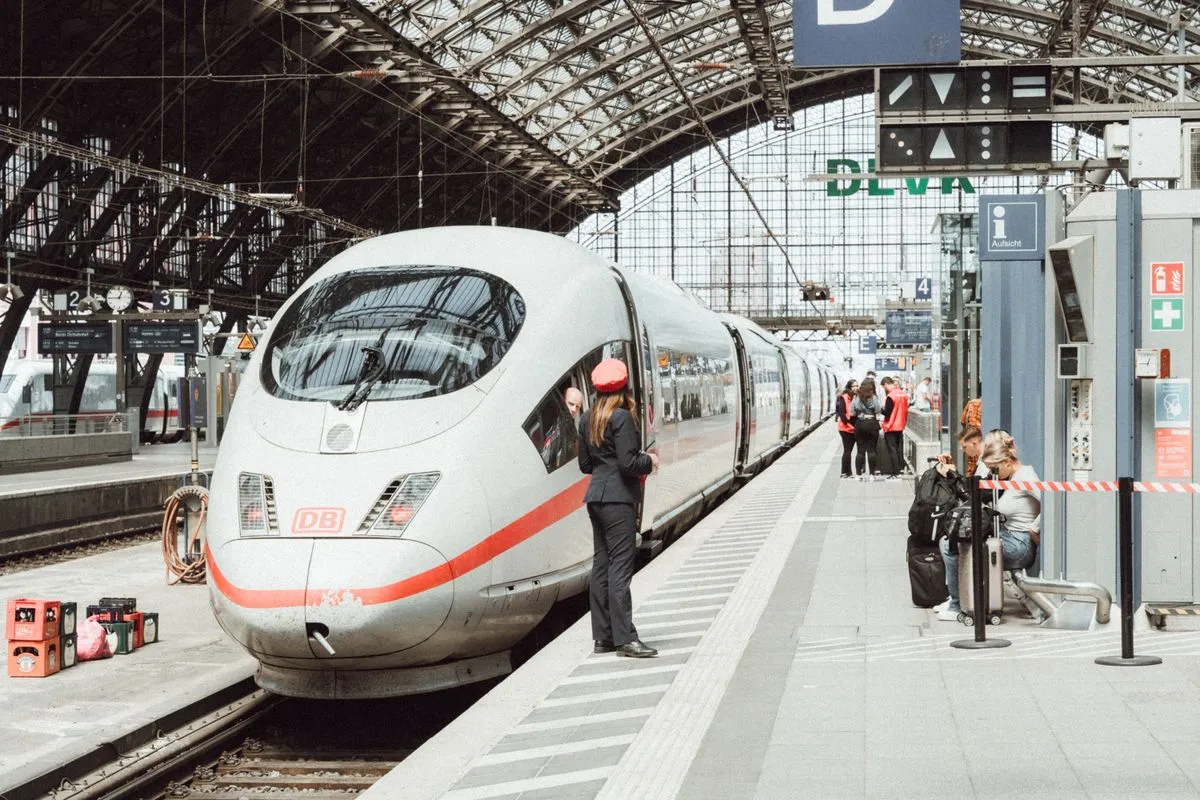
Subscribe through the DB Navigator app, your regional app (MVV/MVG in Munich, VBB in Berlin, etc.), or your transport authority. It’s personalised and non-transferable, monthly, and you cancel by the 10th of a month to end it that month. You need a German IBAN or card for the SEPA debit.
Get the Jobticket version if you can. Loads of tech employers offer the Deutschland-Jobticket under §3 Nr. 15 EStG: the employer subsidises at least 25% (€15.75), a 5% discount kicks in, and you pay a maximum €44.10/month. Some cover 100% and it’s free. Ask HR about the Rahmenvertrag during onboarding — it’s one of the most common and tax-smart German perks, and companies with 5+ people usually already have it. I sat on the normal €58 ticket for two months before someone told me my employer covered it. Don’t be me.
13. Hausarzt — your GP gatekeeper
The German system runs on a general practitioner (Hausarzt) who gates access to specialists with Überweisung referral slips. Specialist waits are long, so a GP who knows you is a real advantage.
Finding an English-speaking one: start with your Krankenkasse’s doctor finder (TK keeps a curated list), then the official KBV Arztsuche which is the authoritative, filterable database, and honestly — ask your colleagues. Word of mouth beat cold-calling for me, because half the practices near me weren’t taking new patients at all. Registration is informal: book or call, show up with your eGK card, hand it over, done.

The ePA (electronic patient record), 2026: since October 2025 all doctors and hospitals must use the elektronische Patientenakte, and the March 2026 rollout added structured medication plans and a patient–practice messenger (Bundesgesundheitsministerium). You’re opted in automatically by your Krankenkasse; you can grant or pull access in the insurer’s app, or file a Widerspruch to opt out completely.
For after-hours non-emergencies call 116 117. For life-threatening emergencies, 112 — same number you’d want to know on day one.
14. Tax-class change if you arrive married
If you marry abroad and both move over, you’re both auto-assigned Steuerklasse IV (it assumes equal incomes). If one of you out-earns the other a lot — very common in tech — Class IV over-withholds every month.
| Combo | When it fits | What happens |
|---|---|---|
| IV / IV | Incomes roughly equal | Default; highest monthly tax on the higher earner |
| III / V | One earns ≥60% of the household | Higher earner withholds less (III), lower more (V); bigger monthly net but you must file jointly |
| IV / IV with Faktor | Unequal incomes, want it fair per paycheck | Finanzamt computes a factor that spreads the Ehegattensplitting benefit; both must file |
You change it on ELSTER (free, needs a certificate registration) — search “Antrag auf Steuerklassenwechsel bei Ehegatten” — or on paper at the Finanzamt. You can switch more than once a year, and it takes effect the month after you apply. With my wife not earning at first, the III/V split meaningfully fattened my monthly paycheck — but remember it’s cashflow, not a tax cut. The joint annual return trues it all up in the end.
The 90-day map
This is more or less the order that worked for me, give or take.
| When | Critical path | In parallel |
|---|---|---|
| Day 1–3 | Temp accommodation; collect the WBS; book Anmeldung (try every district) | Open N26/Wise; buy a prepaid SIM; set up mail-forwarding from home |
| Week 1 | Attend Anmeldung → get the Meldebescheinigung; apply to a Krankenkasse (TK); give HR your IBAN | Unpack; sort electricity/internet; book the Ausländerbehörde online |
| Week 2–3 | Steuer-ID arrives → forward to payroll; Mitgliedsbescheinigung to HR; register Rundfunkbeitrag + SEPA | Find an English Hausarzt; open a traditional bank account; start the flat search |
| Week 4 | First payroll on the right tax class; SVNR arrives; married couples start the ELSTER class change | Subscribe to the Deutschland-Jobticket; order the eGK card |
| Month 2 | Ausländerbehörde appointment; Fiktionsbescheinigung if needed; sign a permanent lease | Register with the Hausarzt; prepaid → postpaid (starts SCHUFA); Führungszeugnis if your job needs it |
| Month 3 | Physical eAT arrives (or pickup); re-do Anmeldung if you moved | First free SCHUFA Datenkopie; re-check GKV vs PKV if you’re over €77,400 |
| Ongoing | Annual tax return (by 31 July next year, later with a Steuerberater); renew the eAT 3 months before expiry | Keep SCHUFA clean; use the Jobticket; enjoy the 30 days of leave 🌍 |
City notes from people who did it
Berlin
Skip Mitte and Friedrichshain-Kreuzberg, go outlying (Spandau, Marzahn, Reinickendorf). Check the online Anmeldung first — if your case fits, you never walk into a Bürgeramt. LEA Berlin runs Blue Cards via online upload then an appointment, and the reply comes weeks after you submit, so submit early. Browse Berlin tech jobs while the queue does its thing.
Munich
The KVR does both Anmeldung and the Ausländerbehörde. Six Bürgerbüro branches, book any of them. The Nottermin (emergency) slots drop on a daily release — set an alarm, be ready. Ask HR if your employer can pre-submit through a corporate “Anmeldung Digital” channel; mine couldn’t, but bigger firms can. Munich jobs here.
Hamburg
Now “Hamburg Service vor Ort”, one system at serviceportal.hamburg.de. New slots at 07:00 and 10:00 daily. The welcome.hamburg.de portal routes skilled-worker requests to a dedicated desk — use it. Hamburg listings.
Frankfurt
Monday and Wednesday walk-in hours at most Bürgerämter let you skip the queue — turn up at opening, pull a number. The branch offices (Fechenheim, Harheim, Kalbach) are quieter. Fiktionsbescheinigungen are often mailed automatically now, so check your post before chasing. Frankfurt jobs.
Leipzig
Fastest of the six, genuinely — Anmeldung often in 1–3 weeks, Ausländerbehörde in 4–6. New appointments at 17:00 daily. ID pickup without an appointment at Otto-Schill-Straße, Wiedebach-Passage and Paunsdorf-Center most weekdays. Leipzig jobs.
Cologne
Nine district offices, try them all, morning slot releases. Köln has a skilled-worker service through the IHK that can sometimes speed up Blue Card paperwork. And if your employer uses the accelerated §81a procedure, visa appointments at German missions abroad must be scheduled within three weeks — a big deal if you’re still overseas. Cologne jobs.
The questions people actually ask me
These come up basically every time a friend-of-a-friend lands here, so, short answers.
What’s the very first thing I should do?
The Anmeldung appointment. Book it before you’ve even unpacked, from any district, weeks out if that’s all there is. Everything else hangs off the Meldebescheinigung.
Can I get paid before my Anmeldung?
You can start the paperwork, but payroll really wants a Steuer-ID (which needs the Anmeldung) and a Krankenkasse membership. Open N26 day one for the IBAN, and push the Anmeldung hard — that’s the bottleneck, not the bank.
How do I avoid the 42–50% tax-class-6 withholding?
Get your Steuer-ID to HR before the first payroll run. If the letter is slow, walk into the Finanzamt with your passport + Meldebescheinigung and ask them to print it. I didn’t, and my first payslip paid for the lesson.
Which health insurance for an English speaker?
TK is the default for tech people — the English flow is the smoothest and the rate is competitive. Barmer is good if you have a family. You apply directly, not through your employer.
Do I really have to pay the TV fee?
Yes. €18.36/month per household, whether or not you own a TV, and they find you through the Melderegister. In a WG, only one person pays — share a Beitragsnummer.
When can I sign a normal phone contract / rent a flat?
The phone contract: once you’ve got an Anmeldung, a German account, and a few months of clean payments building SCHUFA — until then, prepaid. The flat depends on the type, and this is where people panic for no reason. A furnished or temporary place, or a room in a WG, you can usually get with no SCHUFA at all — those landlords expect newcomers without a file and check your payslips or bank statements instead. The classic move is exactly that: furnished or shared first, register, let your SCHUFA build over a few months, then go after an unfurnished, long-term lease — that’s the one where the Makler really does want a Bonitätsauskunft and your last payslips. So it isn’t “no SCHUFA, no flat.” It’s “no SCHUFA → furnished or WG for now.”
The German-word decoder 📖
Germany throws a lot of very long nouns at you in the first weeks, and most of them aren’t in the dictionary you studied. Here’s the cheat sheet — alphabetical, skim it now and come back whenever a word stops making sense.
| German term | What it means (and why you care) |
|---|---|
| Abmeldung | Deregistration — the opposite of Anmeldung. You file it when you leave an address, or in a WG to stop double-paying the broadcast fee. |
| Anabin / ZAB | The federal database (Anabin) and office (ZAB) that decide whether your foreign degree is recognised. The Ausländerbehörde checks this for the Blue Card. |
| Anmeldung | Registering your home address at the local office. The root of the whole chain — almost nothing works before it. |
| AufenthG (Aufenthaltsgesetz) | The Residence Act — the law behind your residence permit and the Fiktionsbescheinigung (§81). |
| Ausländerbehörde | The immigration office, where you convert your visa into the eAT card. |
| AusweisApp | The official app that reads your ID/permit eID chip over NFC for online government services. |
| Beitragsnummer | Your broadcast-fee account number. In a flat-share, share one so only one person pays. |
| Beitragsservice | The body that collects the Rundfunkbeitrag for ARD/ZDF/Deutschlandradio. |
| Belegart N / O | The two Führungszeugnis types: N is mailed to you, O goes straight to a public authority. |
| Bonitätsauskunft | The tidy, landlord-friendly SCHUFA certificate (~€30) that Maklers ask for. |
| Bundesagentur für Arbeit | Federal Employment Agency; signs off some work permits below the Blue Card threshold. |
| Bürgeramt | The citizens’ office where you do the Anmeldung (called KVR in Munich, Kundenzentrum in Cologne). |
| BZSt (Bundeszentralamt für Steuern) | Federal tax office that issues your Steuer-ID. |
| Chancenkarte | The points-based “Opportunity Card” job-seeker permit; usually needs a Sperrkonto. |
| D-visa | The national long-stay visa you enter on, later converted to the eAT. (Not German, but everyone says it.) |
| eAT (elektronischer Aufenthaltstitel) | Your residence permit as a credit-card-sized chip card. |
| eGK (elektronische Gesundheitskarte) | Your physical health-insurance card; you show it at every doctor. |
| Ehegattensplitting | Joint tax assessment for married couples — the reason Class III/V can fatten one paycheck. |
| ELSTER | The free official online portal for tax filing and tax-class changes. |
| ePA (elektronische Patientenakte) | Electronic patient record, mandatory since late 2025; opt out with a Widerspruch. |
| Faktorverfahren | The “factor” tax option that spreads the married-couple benefit fairly across both paychecks. |
| Familienversicherung | Free GKV cover for a non-working spouse and kids under your policy. |
| Fiktionsbescheinigung | A bridging certificate that keeps you legal while the eAT is still being printed. |
| Finanzamt | Your local tax office — issues the Steuernummer and handles your return. |
| Führungszeugnis | Certificate of good conduct (police clearance); some jobs require it. |
| GKV (gesetzliche Krankenversicherung) | Statutory/public health insurance; mandatory below €77,400/year. |
| Hausarzt | Your GP/family doctor, and the gatekeeper to specialists. |
| Inkasso | Debt collection. One bill landing here can wreck a young SCHUFA file for years. |
| Konditionsanfrage | A SCHUFA-neutral rate inquiry — ask for this, never a “Kreditanfrage”. |
| Krankenkasse | Your health-insurance fund (TK, Barmer, AOK, DAK…). |
| KVR (Kreisverwaltungsreferat) | Munich’s combined citizens’/immigration authority. |
| LEA (Landesamt für Einwanderung) | Berlin’s immigration office. |
| Lohnsteuerklasse / Steuerklasse | Your wage-tax class (I–VI) that sets monthly withholding. |
| Makler | Estate / letting agent. |
| Meldebescheinigung | The registration certificate from the Anmeldung. The key to everything — make copies. |
| Melderegister | The population register; agencies (like the broadcast fee) pull your address from it. |
| Mitgliedsbescheinigung | Proof of health-insurance membership your employer needs to pay you. |
| Nottermin | An emergency appointment slot, released daily by some offices. |
| PKV (private Krankenversicherung) | Private health insurance; optional above €77,400/year. |
| Rundfunkbeitrag | The compulsory €18.36/month broadcast fee, charged per household. |
| SCHUFA | Germany’s main credit bureau. You arrive with no file, which reads as “risky”. |
| SEPA Lastschrift | Direct debit — the default way to pay recurring bills. |
| Sperrkonto | A “blocked account” proving you can support yourself; needed for the Chancenkarte, not the Blue Card. |
| Steuerberater | A tax advisor; worth it for a complex return. |
| Steuer-ID (Steueridentifikationsnummer) | Your permanent 11-digit personal tax ID. This is the one you give your employer. |
| Steuernummer | A separate tax number for filing/freelancing, issued by the Finanzamt. |
| SVNR (Sozialversicherungsnummer) | Your social-security number (a.k.a. Rentenversicherungsnummer), auto-generated after Krankenkasse enrollment. |
| Termin | An appointment. The single scarcest resource in Germany. |
| Überweisung | A referral slip from your Hausarzt to a specialist. (Also means a bank transfer — context tells you which.) |
| Verpflichtungserklärung | A formal sponsorship declaration; an alternative to a Sperrkonto. |
| Versicherungspflichtgrenze | The €77,400 income line above which you may switch to private insurance. |
| WBS (Wohnungsgeberbestätigung) | Your landlord’s signed confirmation of move-in; required for the Anmeldung. |
| WG (Wohngemeinschaft) | A shared flat / flatshare. |
| Widerspruch | A formal objection — e.g. to opt out of the ePA. |
| Zusatzbeitrag | The extra % each Krankenkasse adds on top of the base health-insurance rate. |
Official resources (bookmark these)
- Make it in Germany — the government portal for internationals: make-it-in-germany.com
- BAMF — Federal Office for Migration and Refugees: bamf.de
- Bundeszentralamt für Steuern — Steuer-ID: bzst.de
- ELSTER — tax filing and tax-class changes: elster.de
- Führungszeugnis: bundesjustizamt.de / fuehrungszeugnis.bund.de
- Rundfunkbeitrag: rundfunkbeitrag.de
- Deutsche Rentenversicherung: deutsche-rentenversicherung.de
- Doctor search + on-call medical service: 116117.de
- Full legal texts (Bundesmeldegesetz, AufenthG, EStG): gesetze-im-internet.de
Last thing
The German state rewards patience and paperwork, but more than anything it rewards sequence. Nail the Anmeldung in week one and the rest more or less unblocks over the next two months. Start the fintech bridges on day one so you’re not sitting idle. Get the Steuer-ID to HR before payroll. Pick a Krankenkasse that talks to you in your language. And the 14-day deadline everyone panics about? Widely missed without consequence — the deadlines that actually bite are your visa expiry and your first payday.
Three months in, you’ll have the Meldebescheinigung, the Steuer-ID, the eGK card, the residence chip, a SCHUFA file slowly turning friendly, a Hausarzt who knows your face, and a Deutschlandticket that works from Rostock to Garmisch. It’s a grind, I won’t pretend otherwise. But somewhere around month three it stops feeling like fighting the country and starts feeling like living in it. When you’re ready for what comes after day 90, my Blue Card to citizenship timeline picks it up from there.
These are my own experiences and figures I checked for 2026 — not legal or tax advice. German admin rules change mid-year and vary by Bundesland, so always confirm on the official .de / .bund.de portals or with your own Ausländerbehörde and a Steuerberater before you file anything time-sensitive. — Arjun