
Are you an IT specialist dreaming of moving to the EU? Honestly, right now is probably the best time. I went through the whole process myself — job hunting from abroad, interviews, visa paperwork, packing my life into two suitcases, and then figuring out everything from registering my address to opening a bank account. This is the guide I wish I’d had when I started.
I’ll share what worked, what almost broke me, and the boring administrative stuff nobody warns you about. No fluff, no recruiter-speak, just an honest walkthrough from one developer to another.
Before we start: check whether you actually qualify for a German work visa or Blue Card using our visa eligibility checker, and skim our complete Blue Card guide if you want the legal details up front.
📋 Table of Contents
- Choose a country
- Check your English level
- Prepare your resume / CV
- Train your interview skills
- Find a company that offers relocation or visa support
- Collect offers and pick a city
- Financial prep before you fly
- Prepare your visa documents
- Find temporary housing and pack
- First 7 days in Germany
- First 14 days: bank account, tax class, immigration office
- Essential apps and websites you’ll need from day one
- Months 2–6: settling in
- After 1 year: career moves and salary growth
- After 2 years: Schufa, mortgage, permanent residency
- If you decide to leave: pension refund
- Conclusion
1. Choose a country
My personal pick was Germany, and here’s why:
-
💪 The strongest economy in the EU
-
💼 Tons of job opportunities, including companies that explicitly offer relocation and visa support
-
🌳 Moderate climate, clean air, and a high quality of life in most cities
-
🗣️ An English-friendly tech community
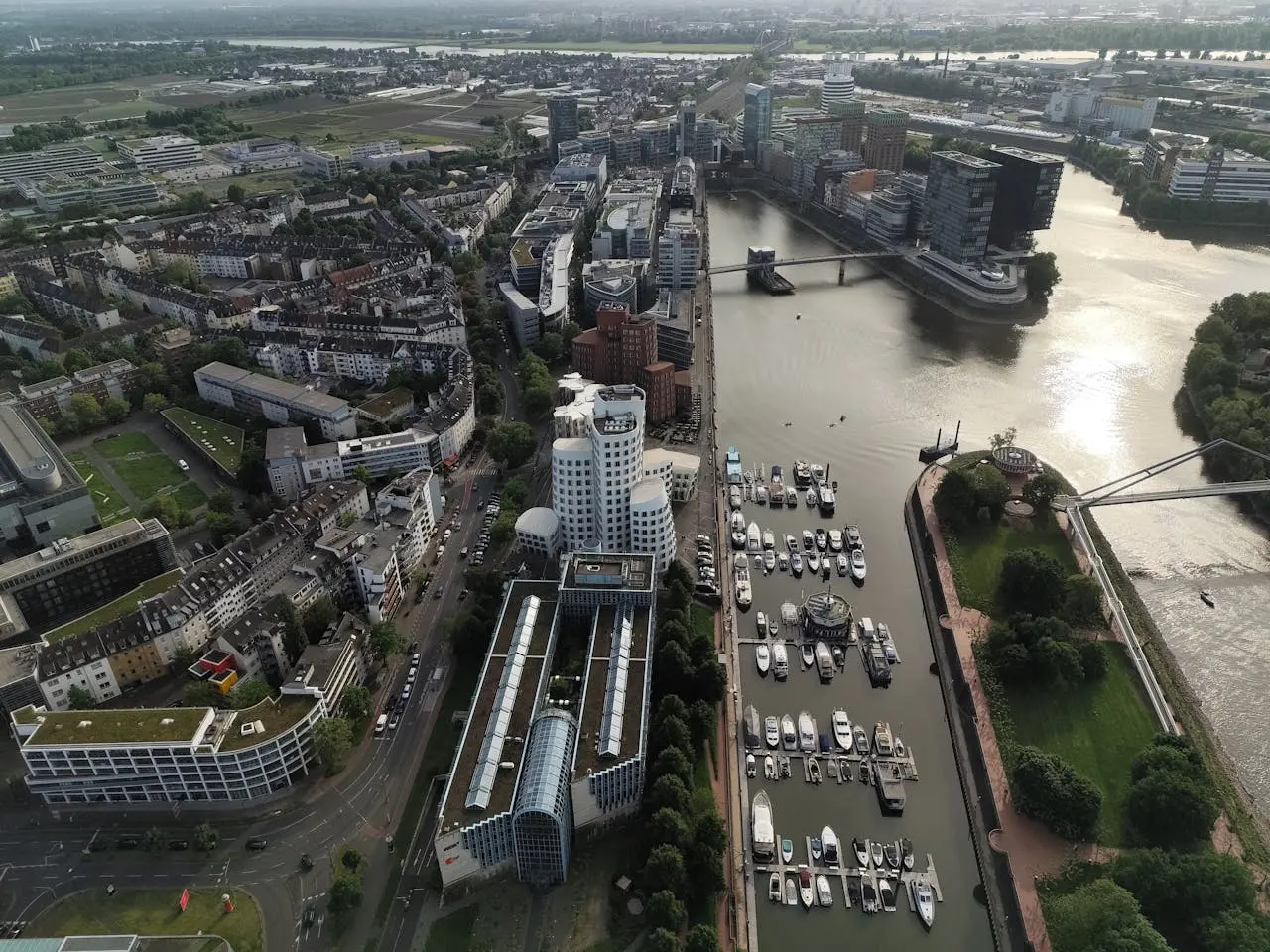
That said, Germany isn’t the only good choice. The Netherlands, France, Portugal, Ireland, and Spain all have strong tech scenes and active relocation programs. Pick based on climate, culture, language difficulty, and where the jobs are for your specific stack. If you’re weighing the two biggest expat magnets specifically, I put them head-to-head — take-home pay, visa thresholds, cost of living — in Germany vs the Netherlands for Tech Workers.
💡 Reality check on language: No matter what shiny relocation brochures say, English will not replace the local language long-term. Even in Germany or the Netherlands. You can absolutely relocate without a word of German — many of us did — but if you plan to stay more than two years, start learning seriously. Banking apps default to German, tax letters arrive in German, your doctor’s receptionist might not speak English, and integration with locals beyond your team is hard without it.
2. Check your English level
Before applying for jobs, get honest with yourself about your spoken English. In European tech, English is the working language for almost every international team. (Good news: plenty of German tech companies run their engineering entirely in English — I keep a verified list in Working in Germany Without Speaking German.) To pass interviews comfortably you’ll want at least Upper-Intermediate (B2), and obviously, the higher the better.

If your written English is solid but you don’t speak it daily, plan 1–2 months of dedicated practice before applying. Here’s what actually works:
-
🤖 AI voice mode — ChatGPT, Claude, Gemini all have voice. Free or cheap, available 24/7, infinitely patient. Great for the first few weeks of warming up.
-
👨🏫 1:1 tutoring — platforms like italki, Preply, Cambly. Pay-per-lesson, no commitment.
-
🎥 YouTube channels — pick topics you actually care about (your tech stack, video games, cooking, whatever). Comprehensible input is the secret.
-
🎬 Movies and shows with English subtitles — not your native language subtitles. English audio + English subs.
📖 My story: When I was preparing for relocation and wanted to go from Upper-Intermediate to Advanced, I used a web platform that offered 1:1 lessons with a native English-speaking tutor 2–3 times a week, one hour each. Each lesson cost me around $10 — a lot for me at the time, but it paid for itself many times over in interview confidence.
Andrew T., if you’re reading this — thank you. You are an amazing tutor.
Don’t stress too much. In 2026 there are more free ways to improve your English than ever before. Surround yourself with it: switch your phone to English, watch dev conference talks, listen to tech podcasts on commutes.
3. Prepare your resume / CV
In 2026, most companies run resumes through AI and ATS (Applicant Tracking System) parsers before a human ever sees them. Some HRs will tell you they don’t — they’re often wrong about their own pipeline.

What this means for you: simple, parseable structure wins. Fancy CVs built in Canva with two columns, sidebars, and graphics often get rejected before a human reads them because the ATS couldn’t extract your tech stack.
The EU CV rules of thumb
-
📄 One page only. Two only if you have 10+ years of experience.
-
🚫 No photo. This is a legal and cultural standard in modern EU hiring. Older guides may say otherwise — they’re outdated.
-
📞 Contact data: name, email, phone (with country code), LinkedIn, GitHub. City and country only — no street address.
-
🛠️ Tech stack section near the top — this is what gets matched against the job description.
-
📅 Reverse chronological work history with company, role, dates, and 3–5 bullet points of achievements (not responsibilities).
-
🎓 Education at the bottom, brief.
Tailor for each job
It’s a good idea to slightly adjust your CV for each job to match the keywords in the description, so the ATS surfaces you. This doesn’t mean lying — if a company needs a Perl developer and you don’t know Perl, don’t claim you do. But if they want a PHP developer with Google Cloud experience and you’re a PHP developer with AWS experience, listing “Google Cloud (familiar)” is fine — the platforms are 90% conceptually identical and you can ramp up quickly. Be smart, save your time and the HR’s time.
What if you don’t have much experience?
Be honest about this: if you’re a fresh graduate with no commercial experience, the international job market is tough. The list of companies willing to relocate someone with zero experience is very short — not impossible, but tiny. Companies invest €5,000–€15,000 in relocating each hire, and that math only works on developers they’re confident can deliver.
💭 A note on “embellishing” experience: people in our industry sometimes pad their CVs with imaginary jobs or stretched timelines. I won’t pretend this doesn’t happen. I’ll just share what I’ve seen and let you decide.
When it gets caught — and it does, more often than people think — the consequences are asymmetric. Background-check services exist (HireRight, Sterling, Onfido) and are used by larger German companies, especially for visa-sponsored roles. Direct phone calls to your previous Indian or Russian employer are rare due to language and time zones, but recruiters cross-check LinkedIn timelines in 30 seconds. The technical interview is the real filter — if you claim “5 years of Kubernetes in production” and freeze on basic kubectl questions, the offer doesn’t come. And if a fake job is discovered after you’ve relocated, you can lose both the job and your Blue Card under §54 AufenthG1 (false information for a residence permit), which means deportation.
So my honest take: invest your time in building real shippable evidence instead.
What to build instead if you’re light on commercial experience:
-
🛠️ Pet projects deployed to production — not a tutorial clone, something with real users, even if it’s just 20 of them. Document the architecture, the trade-offs, the things that broke. This is a story you can tell in interviews.
-
🌍 Open-source contributions — pick a project in your stack, fix a “good first issue,” merge a PR. Every merged PR is a verifiable, public artifact you can link from your CV.
-
💼 Freelance via Upwork, Toptal, or Fiverr — even small gigs give you a trackable history with reviews.
-
🎓 University projects packaged in business language — instead of “Implemented a search algorithm for my thesis,” say “Built and optimized a search service handling 10k requests/sec; reduced p95 latency from 800ms to 120ms through index restructuring.” Same project, different framing.
You must know the theory at least, and you must be able to defend every line of your CV in deep technical conversation.
4. Train your interview skills
Even if your spoken English is great, you need to practice interviews specifically. Talking about the weather is one skill; explaining why you chose Postgres over Mongo for a specific use case in your second language under time pressure is another. And if you want to see how the German process differs from US, UK and Indian interviews stage by stage — the Probezeit logic, the salary-timing, the Arbeitszeugnis decoder — I broke all of it down in the German Tech Interview Guide 2026.
You need to be able to clearly answer:
-
Why should this company hire you?
-
Why should they relocate you specifically when there are local candidates?
-
Why do you want to leave your current job?
-
Why this country, why this city?
-
What’s your salary expectation? (Use our Germany salary calculator to ground your answer in real net numbers.)

📖 What worked for me: I asked my English tutor to focus entirely on mock interviews for a few weeks. We ran behavioral questions, system-design walkthroughs, and “tell me about a time when…” STAR-method answers. Most interview questions repeat across companies — you just need to have your stories ready and be confident delivering them.
When you start practicing — whether with a tutor, an AI, or a study buddy — also start clicking the “Apply” button. Apply to companies you don’t necessarily want. The first 5–10 interviews will be rough; you want those to be on jobs that don’t matter, not on your dream company. Build your core, then aim higher.
5. Find a company that offers relocation or visa support
This is where iwill.work was literally built to help: browse jobs with relocation support and jobs with visa sponsorship. You can also browse companies hiring in Germany directly to see who actively sponsors.

Once you start getting interviews, expect a multi-stage process. The exact stages vary by company size and role seniority. Here’s what I went through as a Senior Developer.
5.1 Online screening with HR
What to expect: A 1-on-1 call with a recruiter. You’ll talk about your background, your motivation, expectations, and they’ll explain the company and the process. Often partly behavioral (“tell me about a difficult colleague…”).
How to prepare: Mock this with your tutor. No technical knowledge required at this stage. Practice your “elevator pitch” — a 60-second self-introduction.
Duration: 30–50 minutes.
The HR will tell you about the next steps. Stages vary by role and seniority.
5.2 Online coding session (sometimes optional)
Some companies skip this entirely and instead send you a take-home task to build a small service that you’ll review with one of their developers.
What to expect: 1-on-1 with a senior developer. You’ll either solve a coding problem live or walk through a piece of code in a review-style discussion. Afterward there’s usually a deep technical Q&A about your stack and past projects.
How to prepare: Watch mock interview videos on YouTube (Tech Interview Pro, Continuous Delivery, Hello Interview are solid channels). Practice solving problems with a timer.
Duration: 60–90 minutes.
5.3 Online algorithm session (often optional)
Common at FAANG-tier companies and some serious German tech firms. Less common at mid-size German companies.
What to expect: 1-on-1 with a senior developer. 2–3 problems based on classic algorithms and data structures.
How to prepare: LeetCode is your friend. Start with Easy problems, work up to Medium. There are excellent YouTube tutorials covering the most common patterns (two pointers, sliding window, BFS/DFS, dynamic programming). You don’t need to grind 500 problems — 50–100 well-understood ones is plenty for German hiring.
Duration: ~60 minutes.
5.4 Online architecture session (for Senior+ roles)
What to expect: 1-on-1 with a senior or lead developer. You’ll be asked to design a system on a virtual whiteboard (Excalidraw, Miro, or similar). Classic prompts: “design Amazon,” “design Instagram,” “design a URL shortener.” Your goal is to pick the right tools, justify your choices, and handle the follow-up questions about scale, failure modes, and trade-offs.
How to prepare: Watch system design content. Designing Data-Intensive Applications by Martin Kleppmann is the bible. Practice drawing diagrams while talking — this is harder than it sounds. If your tutor is technical, run mock sessions. Don’t underestimate this stage; it’s the one most candidates feel unprepared for.
Duration: ~60 minutes.
5.5 Final interview
What to expect: Multiple people from the company — squad lead, team lead, sometimes a director or CTO. The questions are usually broader: career goals, why this company, expectations on salary/role/location, and the team match. If it goes well, you’ll get an offer with a proposed team.
How to prepare: This stage rewards calm and authenticity. Skim the company’s blog, recent product launches, and engineering blog if they have one. Have 3–4 thoughtful questions ready for them — this signals you’re evaluating them too, not just begging.
Duration: 60–90 minutes.
6. Collect offers and pick a city
Don’t rely on the first offer you get. Try to collect at least two. An offer is just an intention to hire — it obliges neither side. The company can withdraw it, and you can decline. Multiple offers also give you real negotiating leverage on salary and signing bonus.
⚠️ A signed offer letter (Angebotsschreiben) is not a binding employment contract (Arbeitsvertrag). Until the contract is signed by both parties, anything can happen. Don’t quit your current job or buy plane tickets on the strength of an offer letter alone.
Pick your city carefully
Salary and cost of living vary wildly between German cities. The capitals pay more but eat that premium in rent.
Compare cities side-by-side using our Germany cities explorer, or read the full data-driven ranking — salary vs rent vs English-friendliness vs visa-office waits — in Best Cities for Tech Jobs in Germany. A few highlights:
-
🏙️ Berlin — biggest tech scene, most jobs, highest salaries, but rent is brutal and rising
-
🍺 Munich — huge salaries (BMW, Siemens, Allianz, Google office), beautiful but the most expensive German city
-
⚓ Hamburg — quieter, strong media/logistics scene, more affordable than Berlin/Munich
-
🏘️ Marl and similar smaller NRW cities — rent can be half of Berlin’s for the same apartment size
💡 The hack: The ideal setup is to be hired by a Berlin/Munich/Hamburg company on their big-city salary while living in a smaller city remotely. This isn’t always possible at hire-time (companies often want you in-office for the first 6–12 months), but it’s a real path after your first year.
Run your offers through our net salary calculator to see what you’d actually take home after taxes and social security in each city. Gross-to-net in Germany is roughly 55–65% depending on your tax class — for the real take-home by level, tax class and city, see what software developers actually take home.
7. Financial prep before you fly 💰
Few guides talk about this, but it matters: you need cash on hand to bridge your first 4–8 weeks in Germany. Your German employer pays you at the end of your first month — sometimes the end of the calendar month, not 30 days after you start. If you arrive on the 5th, your first paycheck might land on the 30th of the following month. That’s nearly 8 weeks of expenses before any income hits.

What you’ll spend in the first weeks
| Item | Typical cost (one-time or first month) |
|---|---|
| Temporary housing (hotel/Airbnb, 2–4 weeks) | €1,500–€3,000 |
| Apartment deposit (Kaution, up to 3 cold rents) | €1,500–€4,500 |
| First month’s rent | €700–€1,800 |
| Furniture and basics (IKEA run, bedding, kitchenware) | €1,000–€2,500 |
| Health insurance bridge before German cover starts | €30–€80 |
| Public transport monthly ticket | €58 (Deutschland-Ticket) |
| Groceries for first month | €300–€500 (single), €600–€900 (family) |
| Phone SIM | €10–€30 |
| Translation and apostille of last-minute documents | €100–€300 |
Realistic minimum: €5,000 solo, €8,000–€10,000 for a family of two with kids. Bring more if you can — running out of money in the first month is the most common avoidable crisis I’ve seen colleagues hit.
Money transfer
Bringing physical cash above €10,000 across an EU border requires a declaration. Easier path: use a service like Wise, Revolut, or your bank’s international transfer. Open a Wise multi-currency account before you fly — you can park EUR in it and pay landlords/hotels from it while waiting for your German bank account to be ready.
8. Prepare your visa documents 🛂
If you’re going for the Blue Card route, the timeline is: first you get a National D Visa (typically 90 days), you fly in on that, and then you swap it for the actual Blue Card at the local immigration office within 90 days of arrival.
8.1 The signed contract
⚠️ Remember: an offer letter is not a contract. A signed Arbeitsvertrag is. Only after you have a signed employment contract should you start the visa application.
Your German employer will email or courier the contract for signature. Sign it, scan it, send it back, and ask them to mail you the original — you’ll need wet-ink copies for the embassy.
8.2 Check your degree in anabin
Germany maintains a public database called anabin2 of recognized foreign higher-education qualifications. Open the anabin university search, look up your university and your specific degree.
You’re looking for one of three statuses:
-
H+ ✅ — your university is recognized. Your degree is treated as equivalent to a German one. No further action needed for the visa.
-
H- ❌ — your university is not recognized.
-
H+/- ⚠️ — depends on the specific program.
-
No entry — you need a ZAB Statement of Comparability.
If you’re H+, skip 8.3. Otherwise, read on.
8.3 ZAB Statement of Comparability (if needed)
The ZAB (Zentralstelle für ausländisches Bildungswesen) issues an official statement confirming how your degree maps to German education levels. As of 2026, this is mandatory if your degree isn’t in anabin with H+ status.
The process now requires a BundID account. BundID is Germany’s unified federal digital identity (think of it like Login.gov in the US or Госуслуги in Russia). You need it to log into the ZAB portal.
Step-by-step:
- Go to id.bund.de and create a BundID account using your email and a password. The basic level is enough for ZAB.
- Go to the ZAB portal and log in with your BundID. Your personal data transfers automatically.
- Fill out the application: personal info, university name and dates, degree details. Upload scanned, certified copies of your diploma and transcript.
- Pay the €208 fee via the bank details provided after submission.
- Wait. Standard processing is 3–4 months. Express processing (additional fee) drops it to 6–8 weeks.
- The Statement of Comparability arrives in your BundID account inbox. Download and keep it forever — you’ll need it for the visa, sometimes for the immigration office, and possibly for future job changes.
⚠️ Don’t delete your BundID account — it’s where the Statement lives. If you delete the account, you lose access to it.
8.4 Apostille and translation
For every official document (diploma, marriage certificate, birth certificates of children), the order is strictly:
- Apostille first in the country that issued the document. This is a legalization stamp added by your country’s foreign ministry or designated authority.
- Certified translation second by a sworn translator (in German: vereidigter Übersetzer) into German. The translator must be authorized in Germany or recognized by the German embassy in your country.
Apostille before translation, not after. Translators in Germany often offer this as a bundled service if you’re already in Germany, but it’s faster to apostille in your home country before flying out.
8.5 Pet relocation 🐕
If you’re bringing pets, start this early — some steps have minimum wait times that can’t be skipped.
Mandatory for cats and dogs entering the EU:3
-
💉 Microchip (ISO 11784/11785 compliant) — must be implanted before the rabies vaccination
-
💊 Rabies vaccination — must be at least 21 days old before entry; valid for 1–3 years depending on the vaccine
-
📕 EU pet passport (if coming from another EU country) or Veterinary Certificate (Annex IV) for non-EU origins, issued by an official vet no more than 10 days before travel
-
🧪 Rabies antibody titer test — required if coming from a country not on the EU’s approved list. Must be done at least 3 months before travel.
-
📋 Non-commercial movement declaration
You can bring up to 5 pets under non-commercial rules; more requires commercial import paperwork.
For the official list of approved countries and current requirements, check the Federal Ministry of Food and Agriculture (BMEL) page.
Airline rules: every airline has its own pet policy — weight limits, container sizes, whether the animal flies in cabin or cargo, summer embargoes on certain breeds. Check this before booking flights.
8.6 Family documents (spouse and children)
If you’re relocating with family, they’ll come on family reunification visas, with you as the primary visa holder. You need:
-
📜 Marriage certificate — apostilled and translated to German
-
👶 Birth certificates for each child — apostilled and translated
-
🛂 Valid passports for everyone
-
💉 Vaccination records (especially for children — German schools may ask)
-
🏥 Health insurance that covers all family members
⚠️ If you’ve changed your name (marriage, etc.), bring the documentation chain proving every name change. Bureaucracies hate name mismatches.
8.7 If you own property back home
Issue a notarized Power of Attorney to a trusted family member or friend so they can handle anything urgent — broken pipe, tax bill, neighbor dispute, sale paperwork. A standard local notarized PoA is enough; no apostille needed as long as it’s used inside your home country. Doing this remotely from Germany after the fact is a nightmare.
8.8 The full visa document checklist
Personal:
-
Valid passport (must be valid at least 6 months beyond your intended stay, with at least 2 blank pages)
-
2 recent biometric passport photos (German standard: 35×45 mm)
-
Completed visa application form via the VIDEX portal, printed and signed
Qualification and employment:
-
Signed employment contract from your German employer
-
University diploma — apostilled, then translated to German by a sworn translator
-
ZAB Statement of Comparability (if your degree isn’t H+ in anabin)
-
CV / résumé in Europass or ATS-friendly format
Financial and insurance:
- Proof of health insurance covering at least €30,000 from your day-one arrival (a 90-day travel insurance policy is usually fine; costs €30–€60 in your home country)
Family (if applicable):
- Marriage certificate, birth certificates — apostilled and translated
Other:
-
Federal Employment Agency (Bundesagentur für Arbeit) approval — required for most roles, but this is the employer’s responsibility, not yours
-
For regulated professions (doctors, nurses, engineers in certain specialties): a professional license recognition letter
Fees:
- €75 visa processing fee4 at the embassy appointment. Visa centers may charge additional service fees.
8.9 Visa appointment and waiting
Once your paperwork is complete, book an appointment at the German embassy or consulate nearest you. Processing time varies wildly — from 2 weeks in slow-traffic locations to 2–4 months in high-demand ones. Check your specific embassy’s website for current wait times.
💡 Translate all your medical prescriptions into English or German before you fly. Same for any chronic-condition documentation. German doctors won’t refill foreign prescriptions without seeing equivalent documentation. If you take any prescription medication daily, bring a 2–3 month supply.
9. Find temporary housing and pack
9.1 Where to look for housing
Ideally, secure at least a temporary place before you fly. Here’s the German housing platform landscape (these are the platforms everyone uses — type the name + “.de” to find them):
-
ImmobilienScout24 — by far the biggest, most listings live here
-
Immowelt — solid #2, dedupes well with ImmoScout
-
Kleinanzeigen (formerly eBay Kleinanzeigen) — many private landlords, no agent fees
-
WG-Gesucht — shared apartments (WG) and individual rooms, plus some whole apartments
-
Wunderflats — fully furnished apartments from 1 month, often accept expats without Schufa history. More expensive but lower-friction for arrivals
-
HousingAnywhere — international platform aimed at expats and students
Don’t trust your luck — ask your HR or Relocation Partner (more on them below) for landlord contacts. Companies often have ongoing relationships with relocation-friendly landlords.
9.2 Use your Relocation Partner
Don’t be shy about asking your company for help. Larger companies often have a Relocation Partner (an external relocation services agency, or a dedicated internal team) whose entire job is to help you with housing, insurance, bank accounts, and bureaucracy. Companies often get tax breaks for hiring and relocating skilled workers, so they have every reason to help you settle.
Ask explicitly during your offer call: “Does this offer include relocation support? Who’s my point of contact?”
9.3 Signing an apartment lease
The German rental lease (Mietvertrag) needs to be physically signed by both parties for long-term tenancies. Electronic signatures are technically valid but rare for foreigners without verified digital IDs.

🚨 Never wire the deposit before you’ve physically signed. This is the #1 expat scam. Real landlords accept this — they’re protecting themselves too. The deposit (Kaution) is by law max 3 cold rents5 (Kaltmiete, the rent without utilities), often paid into a dedicated Kautionskonto (deposit account) that earns interest for you.
9.4 If you can’t find anything before arrival
That’s OK. Plan for:
-
🏨 Hostel or hotel for the first 1–2 weeks (€40–€120/night)
-
🏠 Wunderflats / serviced apartment for the first 1–3 months while you hunt seriously (€1,200–€2,500/month)
-
Apartment hunting once you’re physically in Germany. You’ll get more viewings approved because you can attend.
9.5 A quick word on German floor numbering
In Germany, the floor numbers start at zero. The ground floor is Erdgeschoss (EG, 0), then 1. Stock, 2. Stock, and so on. What’s “second floor” in the US or Russia is 1. Stock in Germany.
Tips for picking a floor:
-
🚫 EG (ground floor) — cheaper, but noisier from the street, and windows are at pedestrian eye-level. Germans rarely use curtains, so your living room becomes a public exhibit. Higher break-in risk too.
-
✅ 1.–3. Stock — sweet spot. Manageable without a lift, quiet, safe.
-
⚠️ Dachgeschoss (attic) — cheap, charming, but bakes in summer and heating bills run high in winter due to thin roof insulation.
-
🛗 Always check whether there’s a Aufzug (elevator). In old buildings (Altbau), often there’s none, and 4–5 floors with no lift means a real workout, especially during the move-in.
9.6 The “do I even need this stuff?” sort
What to bring vs. buy in Germany:
| Bring | Skip |
|---|---|
| Important documents (apostilled originals) | Most electronics — German voltage is 230V, plug type F. Adapters work but bulky |
| 2–3 months of prescription medication + doctor letters | Bedding / kitchenware — IKEA is everywhere |
| Sentimental items, photos | Bulky furniture |
| Laptop, phone, headphones | Winter coats (unless coming from a cold country and you already own a good one) |
| EU-compatible chargers if you have them | TVs (sell them — German TVs are cheap, and you’ll switch to streaming anyway) |
| Decent cookware if you cook a lot — quality kitchenware is pricier in Germany |
10. First 7 days in Germany ✈️
🧭 Sections 10–12 are the condensed arrival sprint. For the full week-by-week version — Anmeldung → Steuer-ID → bank → Krankenkasse → eAT → SCHUFA, laid out in the exact order each step unblocks the next — see my dedicated guide, Your First 90 Days in Germany.
Welcome. Don’t relax yet — your first week has a lot of moving pieces.
10.1 Get a SIM card immediately
Cellular data in Europe is comically expensive on roaming. Grab a local SIM your first day from any kiosk, supermarket (Aldi, Lidl), or operator store.
Affordable prepaid options: Aldi Talk, Lidl Connect, congstar, WinSIM, 1&1. Premium operators with better coverage: O2, Vodafone, Telekom.
⚠️ You’ll need to verify your identity. Since 2017, German law (§111 TKG, now §172 TKG after the 2021 reform6) requires every prepaid SIM owner to be identified by ID document. Options: video chat from the operator’s app with your passport on screen, PostIdent at a post office, or in-person at the operator’s store. Until you complete this, the SIM won’t activate. It’s annoying. Keep your passport accessible.
I started with O2: unlimited EU calls and 30 GB of 5G mobile internet. 30 GB sounds like a lot until your home internet breaks and you tether your laptop — then it’s gone in 3 days. Pick generously.
10.2 Register your address (Anmeldung) within 14 days
This is the foundational step — almost everything else (bank account, tax class, immigration appointment) depends on it.
Step 1: Your landlord must give you a Wohnungsgeberbestätigung — a one-page form confirming you’ve moved in. By law (§19 BMG7), they must provide this within 14 days. The fine for refusing is up to €1,000, so they usually comply.
💡 If you’re staying in a hotel, hostel, or with friends, you generally don’t register there. Registration is for proper rental agreements.
Step 2: Book an appointment (Termin) at the Bürgeramt (also called Bürgerservice or Einwohnermeldeamt depending on the state). Each city has its own portal:
-
Berlin: service.berlin.de
-
Munich: muenchen.de/termin
-
Hamburg: serviceportal.hamburg.de
-
Other cities: Google “Termin Bürgeramt [city name]”
⚠️ Appointments in big cities go fast — Berlin sometimes has waits of 6–8 weeks. Book the same day you arrive. If nothing’s available, ask your HR or Relocation Partner to use their contacts.
Step 3: Go to the appointment with:
-
All passports (yours plus family members')
-
The Wohnungsgeberbestätigung
-
Your rental contract
-
Marriage and birth certificates (if registering family)
The process itself takes about an hour. You’ll walk out with a Meldebescheinigung — your registration certificate. Make multiple copies. You’ll need it for the bank, the immigration office, the tax office, the radio tax, and probably your gym contract.
📅 The law requires registration within 14 days of moving in8. The fine for delay exists but is rarely enforced. Still, don’t drag it out — without Meldebescheinigung you can’t do most of the next steps.
10.3 Register for the radio tax (Rundfunkbeitrag)
Once you have an address (whether or not you have a TV), Germany requires you to pay the public broadcasting fee.
-
🌐 Register at rundfunkbeitrag.de
-
💰 €18.36/month per household in 2026 (not per person)9
-
🧾 Billed quarterly (€55.08 every 3 months) by default; you can switch to monthly or half-yearly
-
🏦 You can set up a SEPA direct debit so it auto-deducts from your bank account once it’s open
If you share a flat (WG), only one person pays; others can register as “secondary residents under the same household.”
10.4 Activate your health insurance
Once your employer has reported your start date, your German health insurance kicks in. The insurer will mail you a plastic health card (Gesundheitskarte) to your registered address within 1–2 weeks. With this card, you can visit any doctor.
Your HR will help you pick an insurer if your company has a preferred one. We’ll go deeper into insurance in section 11.
10.5 Apartment hunting (if you haven’t found permanent housing)
If you arrived without a permanent apartment, start hunting on day one. German rental markets — especially in Berlin, Munich, Frankfurt, Hamburg, Stuttgart — are brutally competitive. Expect to see 50+ other applicants at any given viewing.
Tips:
-
🕒 Be on time. Actually, be early. Germans see lateness as deeply disrespectful. Show up 5 minutes early.
-
📄 Bring a “Mieterbewerbungsmappe” — an application folder containing:
-
Copy of your passport / ID
-
Copy of your employment contract (or offer letter)
-
Last 3 payslips (if you have any; if not, bring the contract)
-
SCHUFA-Auskunft (you won’t have one for the first 6 months — explain you just relocated; many landlords accept this)
-
A short personal letter (English is fine in big cities)
-
Personal liability insurance proof (Haftpflichtversicherung — get one before viewings, costs €5–€10/month)
-
🚨 Never pay anything before signing. Real landlords don’t ask for “deposits to hold the apartment” before you’ve seen it or signed.
10.6 Furnished vs. unfurnished apartments
You have two basic options:
Furnished (möbliert) — typically rented on furnished-apartment platforms like Wunderflats. Costs 20–40% more than unfurnished, but for that you get:
-
🛏️ A bed and basic furniture
-
🍳 A working kitchen (huge — see below)
-
📺 Often a TV
-
⚡ All utilities, internet, garbage collection, and sometimes cleaning bundled into one fixed monthly fee
Unfurnished (unmöbliert) — way cheaper long-term, but be aware:
-
🍴 You usually have to buy the kitchen yourself. In Germany, kitchens are not standard. Most apartments come without a stove, oven, sink, or cabinets. Sometimes the previous tenant sells theirs to you (an Abstandszahlung, typically €500–€3,000).
-
🔌 You set up your own electricity, internet, gas contracts
-
🧹 You’re responsible for your own utilities deals
I’d recommend furnished for your first 3–6 months, then move to unfurnished once you’ve settled and learned enough German (or built relationships with landlords) to navigate the trickier process. Especially if you don’t speak German on arrival.
10.7 A note on washing machines
A surprise that catches almost every expat: German apartments often don’t include a washing machine. They almost always include a dishwasher, but laundry might mean a shared machine in the basement (with token-based payment, €0.20–€0.50 per cycle) or a trip to a public Waschsalon (laundromat).
I really don’t recommend the laundromat route long-term. If laundry-in-flat matters to you (it really should), ask explicitly at viewings. Otherwise budget €300–€500 for a used machine on Kleinanzeigen.
11. First 14 days: bank account, tax class, immigration office
11.1 Open a bank account
Once you have your Meldebescheinigung, open a German bank account. Your salary will be paid into it, and most contracts (electricity, internet, phone, gym, radio tax) require a German IBAN for SEPA direct debit.

Main physical-branch banks:
-
Deutsche Bank — biggest, branches everywhere, English available in major cities
-
Commerzbank — #2, expat-friendly, free account if salary ≥ €700/month
-
Sparkasse — regional savings banks, very widespread, conservative, often German-only
Online-only banks (faster setup, app-based, English):
-
N26 — Berlin-based, English app, popular with expats, accepts most residence permits
-
ING — free account, no monthly fee, good app, English available
-
DKB — free account + free Visa card, online video-ID setup
-
C24 (Check24) — newer, signup bonuses
-
bunq — Dutch fintech with German IBAN, English-first
Money transfer services (not banks but useful):
-
Wise — multi-currency account, useful for international transfers
-
Revolut — similar, with crypto and stocks features
💡 Your HR or Relocation Partner can recommend banks that work well with your company’s payroll. Some employers have preferred banks that streamline payroll setup.
Process for branch banks: Go to the bank’s website, find your local branch, book a Termin. Branch banking hours in Germany are often 9–16h, sometimes until 18h Thursdays — you may need to take time off work for this. Bring passport, Meldebescheinigung, employment contract.
Process for online banks: Download their app, register, complete identity verification via video chat with your passport open. Takes 15–30 minutes total.
After opening, you’ll get your debit card by mail (3–5 business days), then separately your PIN code (another 3–5 days), then separately your online banking access code. Yes, three separate envelopes. This is normal in Germany.
Send your IBAN to your HR as soon as you have it so payroll can process you for the next pay cycle.
11.2 Pick your tax class (Lohnsteuerklasse)
Germany has six tax classes (Steuerklassen)10 that determine how much income tax is withheld from each paycheck. They don’t affect your total annual tax owed — they just shift when you pay it.
| Class | Who it applies to | Withholding level |
|---|---|---|
| I | Single, divorced, widowed (after 1 year separation) | Standard |
| II | Single parents with children | Slightly lower than I |
| III | Married, higher earner (with spouse in V) | Lowest — double basic allowance |
| IV | Married, similar incomes both spouses | Standard (same as I) |
| IV + Faktor | Married, want maximally accurate withholding | Optimized |
| V | Married, lower earner (with spouse in III) | Highest — no basic allowance |
| VI | Second/additional job | Highest, no allowances |
Key point: Tax class only affects monthly withholding, not your final annual tax. You can always reclaim or owe at year-end via your tax return.
📖 My experience: My Relocation Partner submitted my paperwork to the tax office without me, and I was automatically assigned the least favorable class. To switch it, I went to my local Finanzamt website, booked a Termin, downloaded the form Antrag auf Steuerklassenwechsel, filled it out, printed it at the DM drugstore (yes, you can print things at DM), and brought it to my appointment. The whole thing took 10 minutes at the office — the trip there took longer.
My colleague did the same thing by postal mail with the printed form. He didn’t have to go anywhere. Either works. Ask your HR or Relocation Partner which is easier in your city.
You can also change your tax class online via ELSTER, Germany’s official tax portal. ELSTER is free, official, and what every tax-savvy German uses for everything from tax class changes to full annual tax returns.
For married couples especially, picking the right combination (3/5 vs 4/4 vs 4/4-with-factor) can mean hundreds of euros per month in cash flow difference. Run the numbers using a tax class comparison tool — I’d recommend our salary calculator which models all classes.
11.3 Book your immigration office (Ausländerbehörde) appointment
This is the single most important booking in your first weeks. Your D Visa is finite — typically 90 days — and during that window you need to swap it for either a residence permit or a Blue Card.
-
📍 Where: The Ausländerbehörde (also called Ausländeramt or Migrationsamt in different cities; Berlin calls it Landesamt für Einwanderung / LEA, see service.berlin.de)
-
💰 Cost in 2026: €100–€110 for Blue Card issuance; €90–€100 for extension/renewal; varies slightly by state
-
⏰ Booking lead time: in Berlin and Munich, appointments often have 2–4 month waiting lists. Book the day you have your Meldebescheinigung in hand.
🚨 If you can’t get an appointment before your D Visa expires, don’t panic and don’t ghost. Email and call the Ausländerbehörde explaining your D Visa expiry date — they can issue a temporary extension (a small paper slip glued into your passport) that buys you another 30–90 days. This happens routinely.
📖 My story: When my D Visa was about to expire, I just couldn’t book a Blue Card appointment — the system was broken or overloaded for weeks. I was stressed. My HR escalated to our Relocation Partner, who physically went to the office and got my wife and me a 30-day extension. A few days later, she managed to book us an actual Blue Card appointment.
If you have any company support — use it.
What to bring to the appointment:
-
Passports (entire family — everyone needs to come, including kids, for biometrics)
-
All Meldebescheinigungen
-
Employment contract
-
Last 3 payslips (or contract + first payslip if you’ve only had one)
-
ZAB Statement of Comparability (if you needed one)
-
University diploma + translation
-
Health insurance confirmation
-
2 biometric photos per person
-
Money for the fee (cash or EC card — credit cards often don’t work at government offices)
The appointment usually takes 30–60 minutes total. Fingerprints get taken. You leave with a sticker in your passport or an electronic residence permit appointment receipt; the actual card arrives by mail in 4–6 weeks.
📖 One more thing about Ausländerbehörde: the experience varies wildly depending on which civil servant you get. My case worker was patient, kind, and walked me through every step. My colleague got a passive-aggressive person who made his life miserable. Read the Google reviews of your specific office to set expectations — and stay calm regardless. Being polite and prepared is your best strategy.
By the end of your first 4 weeks, you should have: ✅ Address registration, ✅ Bank account, ✅ Tax class set, ✅ Immigration appointment booked or attended.
That’s the bare minimum to be functional. Now we relax — slightly.
12. Essential apps and websites you’ll need from day one 📱
This is the section nobody writes but everyone needs. Install these in your first week.
12.1 Healthcare
-
🩺 jameda.de — find doctors by specialty, location, language spoken, and book appointments online
-
🏥 Doctolib (doctolib.de) — competing platform, increasingly common, smoother UI
-
💊 Apotheke.de — pharmacy finder + delivery
-
🚨 116117 — non-emergency medical hotline (free; staffed 24/7)
-
🆘 112 — emergency number (ambulance, fire) — same across all EU
-
👮 110 — police
💡 If you need a specific specialist (dermatologist, eye doctor, psychotherapist), book early. Some specialty appointments have wait times of 3–6 months in big cities. Don’t wait until you have a real problem.
12.2 Transport
-
🚆 DB Navigator — Deutsche Bahn’s official app. Train tickets, schedules, real-time delays
-
🚇 City transit apps — Berlin has BVG, Munich has MVG, Hamburg has HVV. Each city has its own
-
🎫 Deutschland-Ticket — €58/month flat rate for all regional public transport across Germany. Buy this. Available via your city’s transit app or directly via Deutsche Bahn
-
🛴 Lime, Bolt, Tier — e-scooter rentals in most cities
-
🚗 Free Now, Uber — taxis. Uber is limited in Germany. Free Now is the main local app
-
🚙 ShareNow, Miles, Sixt share — car sharing for occasional drives
12.3 Money and banking
-
💳 Your bank’s app — every bank has one. Set it up before you need it
-
🌍 Wise / Revolut — international transfers, multi-currency
-
💰 Finanzguru — connects to all your German bank accounts, tracks expenses, finds duplicate subscriptions
-
🧾 PayPal — surprisingly popular for peer-to-peer payments in Germany
12.4 Daily life
-
📨 Deutsche Post app — track packages, find post offices, redirect mail
-
📦 DHL — most of your packages will come through DHL. The app shows you exactly when the driver will arrive
-
🛒 Rewe, Edeka, Lidl, Aldi apps — digital loyalty cards and weekly deals at the main grocery chains
-
🍔 Lieferando — food delivery (the German equivalent of Uber Eats / DoorDash)
-
🥡 Wolt, Uber Eats — also available in big cities
-
📱 WhatsApp — yes, just install it. Everyone uses it in Germany — your coworkers, your landlord, your doctor’s reception
-
📅 DM, Rossmann apps — drugstores; loyalty programs save real money
12.5 Bureaucracy and language
-
🗺️ DeepL — way better than Google Translate for German. Install the mobile and desktop versions; you’ll lean on it constantly
-
📷 Google Lens / iOS Live Text — point your phone at any German document or sign for instant translation
-
🏛️ ELSTER — official tax filing portal: elster.de. Free, official, used by tax-savvy Germans for everything
-
📩 BundID app — the digital identity for federal services we set up for ZAB. Also useful for some city-level services
-
🏠 Bürgeramt booking sites — bookmark your city’s portal (Berlin: service.berlin.de, etc.)
-
📚 Babbel, Duolingo, Anki — German learning, in roughly that order of effectiveness for serious learners
12.6 Housing
-
🏠 ImmoScout24, Immowelt, Kleinanzeigen, WG-Gesucht, Wunderflats, HousingAnywhere — covered in section 9
-
🔌 Check24, Verivox — comparison engines for electricity, gas, internet, mobile, insurance. You’ll save real money by switching every 1–2 years
-
🛠️ MyHammer — find a Handwerker (handyman, plumber, electrician) when something breaks
12.7 Social and community
-
🗣️ Meetup — find tech meetups, language exchanges, hiking groups
-
👫 Internations — global expat community; events in every major German city
-
🧑🤝🧑 Slack / Discord communities — most cities have an English-speaking expat tech Slack. Search “[city] expat slack” or “[city] devs slack”
-
🎉 Eventbrite — concerts, workshops, conferences
13. Months 2–6: settling in
If everything went well, by now you have: address registration, bank account, tax class set, Blue Card or extended visa, health insurance card, and ideally a permanent apartment. Time to slow down — slightly.
13.1 Decode your contracts
Most German contracts (phone, internet, gym, electricity) are 12 or 24 months with automatic renewal. Since December 2021, the law changed11: after the initial term ends, you can cancel with 1 month’s notice at any time. To cancel at the end of the initial term, you need to give 3 months’ notice before that term ends.

Set calendar reminders 4 months before any contract ends. This is how Germans save real money.
13.2 Get your supplementary insurances
Beyond mandatory health insurance, there are a few insurances that are technically optional but practically essential:
-
🛡️ Personal Liability Insurance (Privathaftpflichtversicherung) — €5–€20/month. Covers damage you accidentally cause to others (spill water on a neighbor’s laptop, scratch a car with your bike). 85% of Germans have this. Many landlords require it.
-
🏠 Household Contents Insurance (Hausratversicherung) — €5–€15/month. Covers your stuff against theft, fire, water damage.
-
💼 Legal Insurance (Rechtsschutzversicherung) — €25–€50/month. Covers lawyer fees for disputes (employment, tenancy, traffic).
-
🦷 Dental supplemental (Zahnzusatzversicherung) — €15–€30/month. Public health insurance covers basic dental but not crowns, implants, advanced work.
You can compare and buy all of these on Check24 or Verivox. Personal Liability is the cheapest, most-recommended one — start there.
13.3 File your first tax return (Steuererklärung)
Most foreign developers don’t realize they can file a German tax return — and that the average refund is €1,000–€1,500.
You can file via:
-
✅ ELSTER (official, free, German-only) — elster.de
-
✅ SteuerGo, Taxfix, WunderTax, Smartsteuer — paid services (€30–€50), English-friendly, much easier UX
Filing is optional for most people, but mandatory if you’re in tax classes 3, 5, or 6, or if you had multiple jobs or non-employment income.

You have until July 31 of the following year to file12 (e.g., 2025’s return due by July 31, 2026), unless you use a tax advisor — then you get an extension to February.
Common deductibles for IT workers:
-
🏠 Home office (€6/day, max €1,260/year)
-
🚗 Commute (€0.30/km over 20 km, €0.38/km from 2024)
-
💻 Work equipment (laptop, monitor, ergonomic chair) — if used >10% for work
-
📚 Professional training and certifications
-
🌍 Moving costs for the relocation itself (this is huge — the first year often refunds €1,500–€3,000 from relocation alone)
13.4 Build your Schufa score
Schufa (full name: Schutzgemeinschaft für allgemeine Kreditsicherung) is Germany’s main credit bureau. It tracks ~68 million people’s credit history, which is checked when you:
-
🏠 Apply for a long-term apartment (most landlords request a Schufa-BonitätsAuskunft)
-
💳 Open a credit card
-
🏦 Apply for a loan or mortgage
-
📱 Sign a phone contract
-
💼 Sometimes for certain bank accounts
For new arrivals, you have no Schufa history for the first 6–12 months. That’s neutral — not bad. But to build a positive history:
- Open your main bank account (it automatically appears in Schufa)
- Pay all bills on time. Always.
- Sign one small contract — a phone plan is perfect — and pay it on time
- Avoid applying for multiple credit products in short succession
- After 3–6 months, consider applying for a credit card from your bank
Get your free Schufa report: once a year you’re entitled to a free Datenkopie nach Art. 15 DSGVO13 at meineschufa.de. The €29.95 BonitätsAuskunft (the polished version for landlords) is paid.
13.5 Network like your career depends on it 👥
Because honestly, it kinda does.
💡 Start meeting people early. Many of my best decisions came from advice given by colleagues I met in my first month — folks who’d relocated 6 months before me from various parts of the world. They’d already made the same mistakes I was about to make.
Where to network:
-
🍻 Company onboarding cohort — Slack-message the other new joiners and propose a beer after work
-
🍕 Meetup.com — search your city + your tech (e.g., “Berlin React”)
-
🌍 Internations events — bigger, more general expat events
-
🇩🇪 German classes — even if you don’t take them for the language, you’ll meet other expats in the exact same situation
-
🏋️ Sport clubs — Vereine (clubs) are how Germans socialize. Find one that matches your hobby
A friend in week 2 is worth ten LinkedIn connections.
14. After 1 year: career moves and salary growth
You’ve been here a year. You speak passable A2/B1 German for ordering coffee, you understand how the U-Bahn works, you no longer panic at the sight of a German tax letter. Time to think about what’s next.
14.1 You’re now massively more hireable
Finding a job while already in the EU is dramatically easier than from outside. Why?
-
✅ You already have a Blue Card / residence permit — companies don’t need to sponsor a visa
-
✅ You’ve proven you can pass European interviews and deliver in a European company
-
✅ You’re in the same time zone for interviews
-
✅ You don’t need relocation budget — saving companies €5–15k upfront
-
✅ References from your current German employer carry weight
If you stayed at your first company because they relocated you and you felt some loyalty — that’s nice, but after 12 months you’ve fulfilled the implicit deal. After that, you can change jobs freely.
14.2 Switching jobs on a Blue Card
On the Blue Card, the first 12 months of your employment require permission from the Ausländerbehörde if you want to change employers14. After 12 months — you’re free to switch jobs in your profession without notification (you may want to update your records, but it’s not a hard requirement).

If you change jobs in a way that takes you outside your professional field, you’ll need a new Blue Card review.
14.3 The big-city-salary, small-city-life hack
Many of my colleagues who relocated alongside me, after 1 year, switched to remote roles at Berlin or Munich companies while living in Dortmund, Düsseldorf, Marl, or other lower-cost cities. The pay difference is real — Berlin salaries can be 30–60% higher than smaller cities for the same role. Rent in a small town is half of Berlin’s.
This isn’t always possible — many companies want office presence. But it’s a real path. Browse remote tech jobs in Germany and our company directory to see who hires remotely.
14.4 Learn German seriously
If you’ve decided to stay in Germany long-term, start serious German lessons now. Your employer may even pay for them — ask HR.
Why now and not later?
-
🛂 B1 German is required for permanent residency (Niederlassungserlaubnis) — usually achievable after 21 months on a Blue Card, but you need the language test ready
-
💰 German skills can mean 10–20% higher salaries in non-international companies
-
🏥 Doctor visits, lawyer meetings, school parent-teacher conferences — all happen in German
-
🧠 Without German, your social circle stays mostly expat. With it, your world doubles in size
If you can afford it, take individual lessons with a teacher. Group classes are cheaper but slower. Aim for 5–10 hours/week of focused practice.
15. After 2 years: Schufa, mortgage, permanent residency
If you’ve decided Germany is home, this is when the big-life-decision stuff comes into play.
15.1 Permanent residency (Niederlassungserlaubnis)
The Blue Card path to permanent residency is one of the fastest in the EU15:
| Your situation | Time to permanent residency |
|---|---|
| Blue Card + B1 German + 21 months of pension contributions | 21 months |
| Blue Card + A1 German + 27 months of contributions | 27 months |
| Regular work permit + B1 German + 4 years contributions | 4 years |
| Regular work permit + A1 German + 5 years contributions | 5 years |
You’ll need to prove:
-
Continuous employment with mandatory pension contributions
-
Sufficient income (no welfare claims)
-
Adequate language level (B1 or A1)
-
Basic knowledge of the German legal and social system (the “Leben in Deutschland” test, can substitute for the language requirement)
-
Sufficient living space for you and dependents
-
Health insurance
15.2 Citizenship
As of 2024, Germany allows dual citizenship16, and the path to naturalization is:
-
5 years of residency with successful integration (replaces the old 8 years)
-
3 years if you have “outstanding integration achievements” (C1 German, civic engagement)
-
B1 German + Einbürgerungstest + clean criminal record + financial self-sufficiency
I walk through the full, up-to-date 2026 timeline — Niederlassungserlaubnis at 21 months, passport at 5 years, with worked examples — in From Blue Card to German Citizenship.
This is huge for non-EU passport holders — German citizenship is one of the strongest passports in the world.
15.3 Buying property and getting a mortgage
Germany is unusual in that homeownership rates are low (~50%) compared to most countries. Most Germans rent forever. But if you want to buy:
Mortgage basics:
-
🏠 20% down payment is standard. Plus 10–12% for “side costs”: property transfer tax (Grunderwerbsteuer, 3.5–6.5% depending on the state), notary (1.5%), real estate agent (3.57%)
-
💼 Programs with 10% down exist for very strong financial profiles
-
📅 10–15 year fixed-rate periods are the standard, then you refinance
-
📈 2026 rates: around 3.5–4.0% (down from the 2023–24 peak of 4.5%+)

Reality check: As a non-German with 2 years of residency, you can get a mortgage — but expect:
-
Stricter conditions
-
Higher rate
-
Most paperwork in German (presence of a sworn translator at notary signing required if you don’t speak German)
If buying isn’t urgent, wait until year 3–4 when your Schufa is mature and your German is solid.
15.4 Schufa: now it matters
By year 2, you’ve built real Schufa history. Check it once a year using the free Datenkopie. Look for:
-
❌ Errors (it happens) — dispute them via meineschufa.de
-
📊 Score trend — should be improving over time
-
🧾 Closed contracts that haven’t been removed (cancel them through the original provider)
A Schufa score above 95% unlocks better rates on loans, mortgages, and even certain rental markets.
15.5 Car ownership
A common question: should you buy a car?
In major cities (Berlin, Munich, Hamburg, Frankfurt) — probably no. Public transport + Deutschland-Ticket + occasional rentals via ShareNow/Sixt share is cheaper and less stressful than owning. Parking is brutal, fuel is expensive, and the Umweltzone (low-emission zones) rules can be confusing.

If you live in a small town or commute across regions — yes, a car helps. Used cars on AutoScout24 or Mobile.de. Budget ~€1,500/year for Kfz-Versicherung (mandatory liability insurance), Steuer (tax), and basic maintenance, plus fuel.
16. If you decide to leave: pension refund
If you eventually decide Germany (or the EU entirely) isn’t for you, there’s one administrative wrap-up worth knowing about: the pension refund.
How it works
You and your employer both contribute to the German pension system (Deutsche Rentenversicherung / DRV) — currently 9.3% each of your gross salary, up to a ceiling.
If you leave the EU/EEA/Switzerland permanently, you can apply to refund your share17 — but not the employer’s share.
Eligibility
-
✅ You’ve left the EU/EEA/Switzerland with no plans to return
-
✅ At least 24 months have passed since your last German pension contribution
-
✅ You’re not working in another EU/EEA country
-
✅ You haven’t already qualified for German pension under bilateral treaties
Process
Apply to Deutsche Rentenversicherung using form V0901 (Antrag auf Beitragserstattung). You’ll need:
-
Passport copy
-
Proof of permanent residence outside the EU (visa, residence card, address registration)
-
Bank account details for the refund
-
Your German social security number (Sozialversicherungsnummer / Rentenversicherungsnummer)
Processing takes 6–12 months. The refund is typically thousands of euros depending on years worked.
⚠️ Consider before applying
This is permanent — you’re forfeiting all German pension rights forever. Alternatives:
-
🌍 Bilateral pension agreements — Germany has treaties with the US, Canada, Japan, Korea, Turkey, Russia, India, and many others. Your German contributions can count toward your home country’s pension, and vice versa. Often more valuable than the cash refund.
-
🔄 Wait and see — if you might return to the EU within 10 years, your German pension rights remain valid even from outside.
Talk to a pension advisor before submitting V0901. Free initial consultations available at DRV offices.
17. Conclusion 🎯
Thanks for reading this far. If you’ve made it through all 17 sections, you have a clearer picture than most candidates do before they even start applying. That’s already a competitive edge.
A quick recap of what matters most:
-
✅ Eligibility first. Run our visa checker before anything else — knowing your category saves weeks of wrong assumptions
-
✅ Practice interviews like a sport. Speaking English well is the foundation; passing a senior-level technical interview in your second language is a separate, learnable skill
-
✅ Apply broadly, then narrow. Your first 5 applications will teach you more than the next 50
-
✅ Cash matters. Bring 4–8 weeks of expenses with you. The first paycheck arrives later than you think
-
✅ Don’t skip the boring stuff. Anmeldung, Steuerklasse, Krankenversicherung — these unlock everything else, and my first 90 days post-arrival checklist sequences them in the order that actually works
-
✅ Network on day one. The colleagues you meet in your first month are your most valuable advisors
-
✅ Learn German. Even if you “don’t need it” at work, it doubles your options for life, career, and community
Quick links
| What | Where |
|---|---|
| Check if you qualify for a Blue Card or work visa | iwill.work/germany/visa-checker |
| Browse jobs with visa sponsorship | iwill.work/germany/jobs/visa-sponsorship |
| Browse jobs with relocation support | iwill.work/germany/jobs/relocation |
| Compare German cities side by side | iwill.work/germany/cities |
| Calculate net salary by city and tax class | iwill.work/germany/calculator |
| Browse companies that hire foreign developers | iwill.work/germany/companies |
| Your first 90 days after landing (admin checklist) | First 90 Days in Germany |
| Detailed Blue Card legal guide | Complete Blue Card Guide |
| All curated job collections | iwill.work/collections |
Don’t be afraid to try. Most people who think relocation is “too hard” never start — and that’s the only real way to fail. Six months sounds long, but it goes fast when you’re doing the work week by week.
This article will keep getting updated as laws and policies change. If you find something out of date, or have a tip you’d like to share, reach out — I’d love to add your experience.
Good luck. 🇩🇪 See you on the other side.
Sources & references
This article cites German federal laws and official government sources. The references below link to the official versions — most are on gesetze-im-internet.de (the Federal Ministry of Justice’s law portal). Laws change; if you’re acting on something time-sensitive, double-check the current version.
-
Aufenthaltsgesetz (AufenthG) §54 — grounds for expulsion include false statements made to obtain a residence title. Full text: gesetze-im-internet.de/aufenthg/__54.html. ↩︎
-
anabin & ZAB are services of the Standing Conference of Education Ministers of the German states (KMK). anabin lists how foreign degrees are evaluated; the ZAB issues individual Statements of Comparability when the database doesn’t cover your case. anabin.kmk.org · zab.kmk.org. ↩︎
-
EU Regulation No 576/2013 governs non-commercial movement of pet animals within the EU. Country-specific requirements (rabies-vaccination wait times, antibody titer tests, approved-country list) are summarised by the German Federal Ministry of Food and Agriculture: bmel.de — Travelling with pets. ↩︎
-
National long-stay visa fee is set by the German Federal Foreign Office (Auswärtiges Amt). Current fee schedule: auswaertiges-amt.de — Visa fees. Service fees at external visa centres (e.g. VFS Global) are charged separately. ↩︎
-
Bürgerliches Gesetzbuch (BGB) §551 — rental security deposit is capped at three months’ cold rent (Kaltmiete); the landlord must hold it separately from their own assets and pay interest at the standard savings rate. Full text: gesetze-im-internet.de/bgb/__551.html. ↩︎
-
Telekommunikationsgesetz (TKG) §172 — identification duty for prepaid mobile subscribers (introduced as §111 TKG in 2017, renumbered to §172 after the TKG reform of 1 December 2021). Full text: gesetze-im-internet.de/tkg_2021/__172.html. ↩︎
-
Bundesmeldegesetz (BMG) §19 — the landlord (Wohnungsgeber) must confirm a tenant’s move-in in writing within two weeks. Refusing or issuing a false confirmation is an administrative offence punishable by a fine of up to €1,000 (§54 BMG). Full text: gesetze-im-internet.de/bmg/__19.html. ↩︎
-
Bundesmeldegesetz (BMG) §17 — anyone moving into a German residence must register at the responsible registration authority within two weeks. Failure or delay is an administrative offence (§54 BMG). Full text: gesetze-im-internet.de/bmg/__17.html. ↩︎
-
Rundfunkbeitrag (broadcasting fee) is set by interstate treaty (Rundfunkbeitragsstaatsvertrag) and currently stands at €18.36 per household per month. Official portal and FAQ: rundfunkbeitrag.de. ↩︎
-
Einkommensteuergesetz (EStG) §38b — wage tax classes (Lohnsteuerklassen) define monthly withholding rates. The final annual tax liability is identical regardless of class — only cash flow changes. Full text: gesetze-im-internet.de/estg/__38b.html. ↩︎
-
Telecommunications Act (TKG) and BGB reform of 1 December 2021 — consumer contracts (telephony, internet, gym, streaming, etc.) that auto-renew after the initial term now renew on a monthly basis and can be cancelled with one month’s notice at any time. Federal Ministry of Justice summary: bmj.de — Faire Verbraucherverträge. ↩︎
-
Abgabenordnung (AO) §149 — standard tax return deadline is 31 July of the following calendar year for self-filed returns; the deadline is extended to the end of February if a tax advisor (Steuerberater) files on your behalf. Full text: gesetze-im-internet.de/ao_1977/__149.html. ↩︎
-
GDPR Article 15 (Right of access) and German Federal Data Protection Act (BDSG) §34 entitle individuals to one free copy per year of personal data held by any company, including credit bureaus like Schufa. Order a free Datenkopie via meineschufa.de (look for Datenkopie nach Art. 15 DSGVO, distinct from the paid BonitätsAuskunft). ↩︎
-
Aufenthaltsgesetz (AufenthG) §18g — Blue Card rules. During the first 12 months of employment, changing employers requires approval from the Ausländerbehörde; after 12 months the change is permitted without prior approval (notification to the authority may still be expected). Full text: gesetze-im-internet.de/aufenthg/__18g.html. ↩︎
-
Aufenthaltsgesetz (AufenthG) §18c — accelerated permanent residency (Niederlassungserlaubnis) for Blue Card holders: 21 months with B1 German, 27 months with A1 German, provided continuous pension contributions and other integration criteria are met. Full text: gesetze-im-internet.de/aufenthg/__18c.html. ↩︎
-
Modernisation of the Citizenship Law (Staatsangehörigkeitsgesetz reform), effective 27 June 2024 — residency requirement reduced from 8 to 5 years (3 with outstanding integration achievements), dual citizenship generally permitted. Federal Ministry of the Interior summary: bmi.bund.de — Citizenship law modernisation. ↩︎
-
Sozialgesetzbuch VI (SGB VI) §210 — refund of statutory pension contributions for persons who have left the EU/EEA/Switzerland permanently and have waited 24 months since their last contribution. Refund covers the employee share only. Apply with form V0901 via Deutsche Rentenversicherung. Full text: gesetze-im-internet.de/sgb_6/__210.html · Form & info: deutsche-rentenversicherung.de. ↩︎